
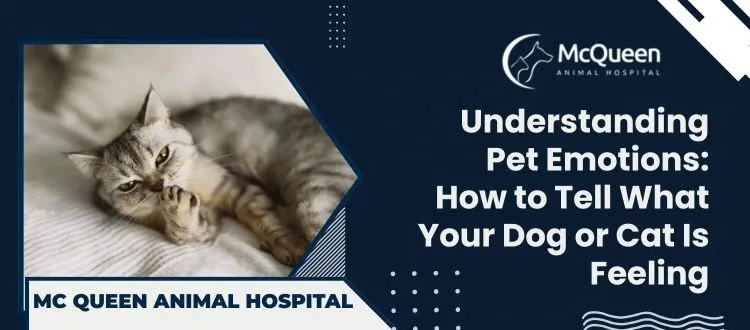
At McQueen Animal Hospital, we often hear pet parents say, “I wish my pet could talk.” While dogs and cats may not use words, they do communicate — through their body language, expressions, and behavior. Understanding pet emotions not only strengthens your bond but also helps you identify early signs of stress, illness, or discomfort. Our team believes that a pet’s emotional well-being is just as important as their physical health.
How Dogs Express Their Feelings
- Happiness:
A relaxed body, wagging tail (especially low or mid-level wagging), soft eyes, and playful behavior are sure signs of a happy dog. A dog that “bows” with its front legs stretched forward is inviting you to play. You may also notice gentle panting, rolling on the back, or nudging for affection — all of which indicate comfort and joy. - Anxiety or Fear:
Tucked tail, pinned-back ears, lip licking, yawning when not tired, or avoidance of eye contact may signal anxiety. Some dogs also pace, tremble, or hide. In multi-pet households, anxious dogs may withdraw or avoid contact with others. Recognizing these early signs allows for timely reassurance or behavior training. - Anger or Aggression:
Raised hackles, stiff posture, showing teeth, and a direct, hard stare are warning signs of aggression. Growling or snapping may follow if the situation continues. Never punish a dog for growling — it’s a natural form of communication. Instead, identify the trigger and consult your veterinarian or a trainer if aggression becomes frequent. - Sadness or Depression:
Loss of interest in walks or toys, reduced appetite, and excessive sleep may indicate sadness or depression. This could stem from a change in environment, the loss of a companion, or underlying health issues. Gentle attention, routine, and mental stimulation can help your dog recover emotionally.
How Cats Communicate Emotion
- Contentment:
A gently purring cat with slow blinks, relaxed whiskers, and upright but soft ears is content. When your cat kneads, head-butts, or curls up beside you, it’s expressing deep trust and affection. Purring is also a sign of relaxation, although some cats purr when anxious — so context matters. - Irritation or Fear:
A twitching or thumping tail, flattened ears, and dilated pupils suggest your cat is annoyed or frightened. Hissing, growling, or swatting are defensive behaviors meant to create space. If your cat hides frequently, consider any changes in the environment or health concerns. - Curiosity and Playfulness:
An alert cat with upright ears, bright eyes, and a softly moving tail tip is in exploration mode. Cats love to stalk, pounce, and chase, which are natural hunting instincts. Interactive toys or laser pointers are great ways to channel this energy positively. - Illness or Emotional Distress:
Sudden withdrawal, lack of grooming, or changes in litter box habits may indicate illness or emotional distress. Cats are masters at hiding pain, so behavioral changes are often the first clue that something is wrong.
Strengthening the Human–Pet Bond
Understanding pet emotions goes beyond observation — it’s about empathy. Here are some ways to strengthen your emotional connection with your furry companion:
- Observe daily: You’ll soon recognize your pet’s ‘normal’ moods and notice any changes early.
- Respect their space: Like humans, pets need quiet moments to recharge.
- Positive reinforcement: Reward calm and friendly behavior with treats, praise, and affection.
- Regular wellness exams: Emotional health often mirrors physical health — our veterinarians can ensure both stay balanced.
- Provide enrichment: Toys, puzzle feeders, and safe outdoor walks stimulate your pet’s mind and reduce anxiety.
When to Seek Veterinary Advice
If your pet’s behavior changes suddenly — such as aggression, withdrawal, or loss of appetite — it could be linked to pain, illness, or anxiety. Don’t assume behavioral changes are purely emotional; sometimes, medical causes like thyroid issues or dental pain can alter temperament. At McQueen Animal Hospital, our veterinarians take a holistic approach, combining medical evaluation with behavioral insight to help your pet live a balanced, happy life.
Need Help Understanding Your Pet?
Our compassionate team at McQueen Animal Hospital in Brampton is here to help you understand your pet’s emotions, behavior, and overall wellness. Schedule a consultation today — we’ll make sure your furry friend feels safe, understood, and loved.
Connect with us:
Facebook: https://www.facebook.com/mcqueenanimalhospital/