
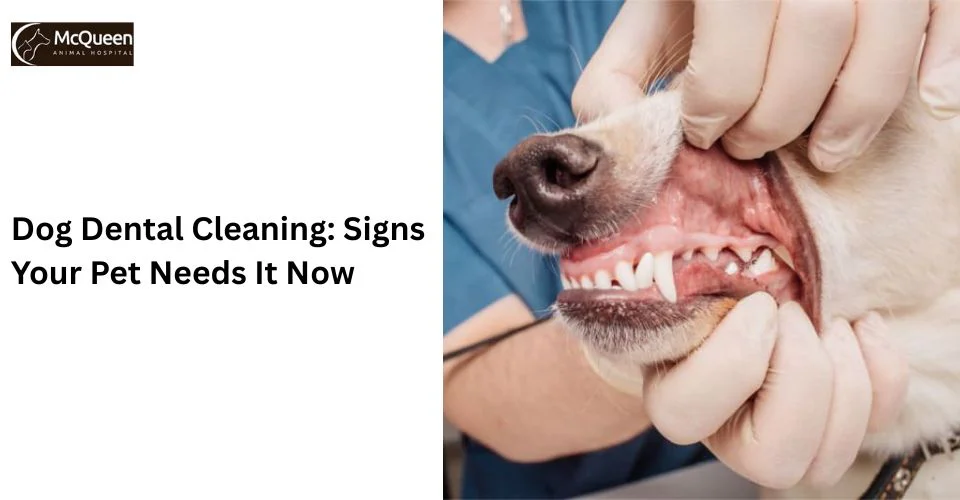
Dental health plays a huge role in your dog’s overall well-being. Yet, many pet parents overlook oral care until problems become too obvious to ignore. Just like humans, dogs can develop tartar, gum disease, and painful infections if their teeth are neglected. By knowing the warning signs, you can take action early and protect your pup from unnecessary discomfort.
At McQueen Animal Hospital, we believe that prevention is the best medicine. We know that pets are considered to be a part of our families, and we strive to treat them as such. Understanding when your dog needs help is the first step toward a longer, happier life.
Why Dental Health Matters for Your Dog?
Many owners assume that bad breath is just a normal part of owning a dog. However, your pet’s oral health is directly linked to their systemic health. When bacteria build up in the mouth, it doesn’t stay there. It can enter the bloodstream and travel to vital organs like the heart, liver, and kidneys.
This is why regular checkups at a reliable Vet Clinic in Brampton are so important. Preventing dental disease is not just about saving teeth; it is about saving lives. We are committed to providing only the highest level of veterinary care to ensure your pet stays healthy from the inside out.
7 Signs Your Dog Needs a Dental Cleaning
Recognizing the symptoms of dental disease early can save your dog from pain and expensive procedures later. Here are the top signs that it is time to schedule an appointment.
Persistent Bad Breath: More Than “Dog Breath”
Occasional bad breath may be normal after a meal, but if the smell is constant and especially foul, it’s a warning sign of bacterial buildup. This is often referred to as “halitosis.”
Bad breath usually points to gum disease or an infection lurking beneath the gum line. Ignoring it allows bacteria to multiply and spread deeper into the gums.
Eventually, these bacteria can enter the bloodstream, causing damage to internal organs. If your dog’s breath makes you turn your head away, it is time for a professional exam.
Yellow or Brown Buildup on Teeth
If you notice visible discoloration on your dog’s teeth that brushing doesn’t remove, it’s likely tartar. Plaque is a soft film that forms daily, but if it isn’t removed, it hardens into tartar (calculus) within 24 to 48 hours.
Tartar creates a rough surface where even more plaque can accumulate. It provides a safe haven for bacteria right against the gum line.
You cannot remove tartar with a toothbrush; it requires professional scaling. If left untreated, this buildup leads to gum inflammation, recession, and eventually tooth decay. A professional cleaning is the only way to restore oral health at this stage.
Red, Swollen, or Bleeding Gums
Healthy gums should look firm and pink. When you lift your dog’s lip, take a close look at the gum line. Redness, swelling, or bleeding are strong indicators of gingivitis, the early stage of periodontal disease.
This inflammation is caused by the body’s immune response to bacteria. If you see blood on your dog’s chew toys or when they eat, the disease is already present.
Without proper care, gingivitis progresses into more severe gum disease, where the tissues supporting the teeth are destroyed. Early treatment helps prevent painful infections and tooth loss.
Difficulty Eating or Chewing Food
Dogs are usually food-motivated. If your dog suddenly avoids crunchy foods, chews on one side of the mouth, or drops kibble while eating, dental pain may be the cause.
Sometimes, owners mistake this for pickiness, but it is often a sign of significant discomfort. Trouble eating often signals advanced dental problems like loose teeth, abscesses, or severe gum inflammation.
Dogs are good at hiding pain, so changes in eating habits should never be ignored. If your pet seems hesitant to eat, they need help immediately.
Excessive Drooling or Pawing at the Mouth
While some breeds naturally drool more than others, a sudden increase in drooling is often a red flag. Excessive drooling can indicate that your dog is unable to swallow comfortably due to pain or nausea.
Similarly, if your dog is pawing at their face or rubbing their muzzle against the carpet, they are trying to relieve discomfort. These behavioral signs often indicate infections, tooth abscesses, or something stuck in the teeth. These subtle cues are your pet’s way of telling you they hurt.
Loose or Missing Teeth
In a healthy adult dog, teeth should be firmly anchored. Adult dogs should not lose teeth. If you notice a loose tooth or find a tooth on the floor, gum disease has likely destroyed the bone and ligaments holding it in place.
This stage is incredibly painful and requires immediate veterinary care. Leaving a loose tooth in the mouth can act as a source of constant infection. Acting quickly helps preserve your dog’s remaining teeth and prevents further complications.
Lumps, Bumps, or Visible Pain
Unusual growths inside the mouth or under the tongue may point to infections, cysts, or even tumors. In addition, any sign of visible pain—such as whimpering when chewing toys or yelping when you touch their muzzle—signals that something is wrong.
These issues should always be checked by a veterinarian as soon as possible. Oral cancer can be aggressive, so early detection is key to successful treatment. Any mass or swelling in the mouth warrants a professional exam.
What to Expect: Professional Dental Treatments & Procedures
When you bring your dog to McQueen Animal Hospital for Dog dental cleaning in Brampton, we follow a rigorous protocol to ensure safety and effectiveness. We endeavor to play an important role in your pet’s life, ensuring their health and well-being.
Here is what happens during a comprehensive dental procedure:
Pre-Anesthetic Assessment
Safety is our top priority. Before any cleaning begins, we perform a full physical exam and blood work. This ensures your pet is healthy enough to undergo anesthesia. We tailor the anesthetic protocol to your dog’s specific needs to minimize risk.
Antibacterial Rinse
We begin by rinsing the mouth with an antibacterial solution to minimize oral bacterial numbers. This reduces the risk of pushing bacteria into the bloodstream during the cleaning process.
Ultrasonic and Hand Scaling
Using ultrasonic scalers and hand instruments, we remove calculus and tartar stuck to the tooth’s surface. The ultrasonic scaler uses vibration to shatter large deposits of tartar, while hand instruments allow us to reach tricky spots.
Subgingival Cleaning (The Most Important Step)
This is a step you cannot see, but it is the most critical part of the procedure. Using special instruments, plaque and tartar are carefully removed from underneath the gum-line.
This is where the bacteria that causes dental disease and gingivitis hides. If we do not perform this task, any surface cleaning or treatments are rendered useless.
Probing and Charting
Each tooth is carefully probed around the gum line to detect any gingival recession or abnormal pockets between the teeth.
We chart every tooth, measuring the depth of the pockets to determine the stage of periodontal disease. This helps us identify which teeth are healthy and which may need attention.
Polishing
Each tooth is polished with a special paste that smooths the surface of the tooth. If we left the tooth surface rough after scaling, plaque would stick to it again very quickly. Polishing makes it more difficult for plaque and tartar to stick to the teeth in the future.
Flushing and Final Check
The mouth and teeth are then thoroughly flushed with water and an antibacterial solution to remove any dislodged debris. We perform a final inspection to ensure no remaining issues are present.
Extractions and Advanced Care
Any teeth requiring extraction or further treatments are then managed by the veterinarian. We always try to save teeth whenever possible, but severely diseased teeth are better removed to eliminate pain and infection. We will discuss this with you fully before proceeding.
Why Choose McQueen Animal Hospital for Your Dog’s Dental Care?
We understand that your pet is family. That’s why we provide:
- Compassionate Care – We treat every pet with love and patience.
- Expert Veterinary Team – Our staff stays updated with the latest advancements in dental care.
- Affordable & High-Quality Services – Premium care without breaking the bank.
- Stress-Free Environment – We make visits as calm and comfortable as possible.
If you notice any signs of dental problems in your dog, don’t wait. Schedule a Dog dental cleaning in Brampton at McQueen Animal Hospital today and give your furry friend the gift of a healthy smile!
Conclusion:
Your dog relies on you to make the best decisions for their health. Dental disease is progressive and painful, but it is also preventable. By watching for the signs of trouble and scheduling regular cleanings, you can add years to your pet’s life. If you notice bad breath, tartar, or changes in eating habits, don’t wait.
We are honoured to have the responsibility of caring for your furry family members. We will always strive to improve and welcome suggestions for improvement because your pet’s well-being is our ultimate goal.
Call us today to book your dog’s dental checkup—because a healthy pet starts with a healthy mouth!