
As temperatures rise in Brampton and across Ontario, so does the activity of parasites like fleas, ticks, and mosquitoes.
These parasites are more than just a nuisance — they can transmit serious diseases that affect your dog’s skin, blood, and internal organs. The good news is that with proper prevention and regular testing, these risks can be significantly reduced.
At McQueen Animal Hospital, we focus on prevention, early detection, and practical guidance to help keep your pet protected throughout the season.
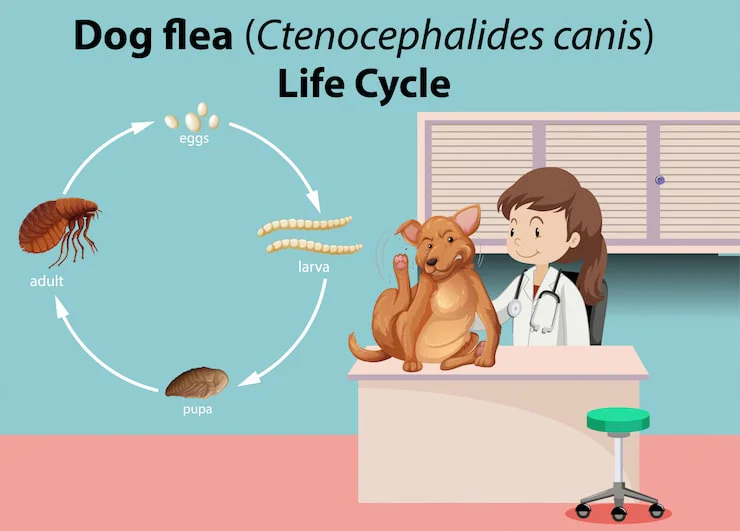
Fleas: Small Parasites, Big Problems
Fleas are one of the most common external parasites in dogs. They reproduce quickly and can spread throughout your home if not controlled early.
Problems caused by fleas:
- Intense itching and discomfort
- Skin infections
- Hair loss
- Flea allergy dermatitis
- Tapeworm transmission
Even pets that spend most of their time indoors can still be exposed, as fleas can be brought into the home on clothing or other animals.
Ticks In Ontario: A Growing Concern
Tick populations are increasing across Ontario, including Brampton and surrounding areas. Warmer temperatures and changing environmental conditions have contributed to their spread, making exposure more common than in the past.
Ticks attach to your dog and feed on blood. During feeding, they can transmit bacteria and parasites that cause disease.
Key tick species found in Ontario
- Blacklegged tick (deer tick – Ixodes scapularis)
- Most important species
- Transmits Lyme disease and Anaplasmosis
- American dog tick (Dermacentor variabilis)
- Common in grassy areas
- Can transmit certain bacterial infections
- Brown dog tick (Rhipicephalus sanguineus)
- Can survive indoors and cause infestations
- Lone star tick (Amblyomma americanum)
- Emerging species, expanding northward
- Groundhog tick (Ixodes cookei)
- Less common in dogs but present in Ontario
Among these, the blacklegged tick is the most clinically significant, as it is responsible for Lyme disease transmission.
Tick-borne Diseases In Dogs
- Lyme disease → lameness, joint swelling, fever
- Anaplasmosis → lethargy, fever, decreased appetite
- Ehrlichiosis → blood-related disorders
One of the challenges is that many infected dogs show little or no symptoms early on, which makes prevention and routine testing especially important.
Why Ticks Are Concerning
- Very small and easy to miss
- Can attach for extended periods
- Disease transmission can occur before detection
- Increasing presence in Ontario
Even a single tick bite can expose your dog to disease.
Heartworm: A Silent But Serious Disease
Heartworm disease is transmitted by mosquitoes and affects the heart and lungs.
Unlike fleas and ticks, heartworms live inside the body and may not cause noticeable symptoms until the disease is more advanced.
Why heartworm is dangerous:
- Can damage the heart and lungs
- May cause coughing, fatigue, and weight loss
- Advanced cases can be life-threatening
Treatment is complex, costly, and carries risks — which is why prevention is strongly recommended.
Why Prevention Is Essential
Preventive medications are designed to:
- Kill fleas before they reproduce
- Reduce the risk of tick attachment and disease transmission
- Prevent heartworm infection
Prevention is far safer, simpler, and more affordable than treating these diseases after infection.
Why Annual Testing Is Important
At McQueen Animal Hospital, we recommend yearly testing for heartworm and tick-borne diseases, even for dogs that are on prevention.
“I give prevention every year. Why does my dog still need testing?”
This is a very common and important question.
1. Ensures prevention is working
Even effective medications can fail due to:
- Missed doses
- Vomiting after administration
- Incorrect timing
Testing confirms your dog remains protected.
2. Detects infections early
Many of these diseases do not show obvious symptoms in the early stages.
Early detection allows treatment before complications develop.
3. Tick-borne diseases can still occur
Tick preventives reduce risk but do not eliminate it completely.
A tick may still attach briefly and transmit disease.
4. Required for safe heartworm prevention
Veterinary guidelines recommend annual testing before continuing heartworm prevention, as giving medication to an infected dog can be unsafe.
Bottom line:
Prevention + testing work together
- Prevention reduces risk
- Testing confirms protection
This combination provides the highest level of safety for your pet.
WHO Needs Protection?
All dogs are at risk, including:
- Dogs that go on walks or parks
- Backyard pets
- Dogs exposed to grassy or wooded areas
Even dogs with limited outdoor exposure are not completely risk-free.
When Should Prevention Start?
In Ontario, parasite activity typically begins in spring and continues through fall.
Most dogs benefit from:
- Starting prevention early in the season
- Continuing through the active months
Your veterinarian can recommend the most appropriate schedule for your pet.
Our Approach At Mcqueen Animal Hospital
We take a practical, individualized approach:
- Recommend appropriate flea, tick, and heartworm prevention
- Perform annual testing
- Tailor plans based on your dog’s lifestyle
- Focus on prevention rather than reactive treatment
Our goal is to keep your pet protected while avoiding unnecessary risks.
Call To Action
Flea, tick, and heartworm season is already here — prevention should not wait.
Call 905-455-7387 to schedule your pet’s annual test and prevention plan
McQueen Animal Hospital, Brampton
Frequently Asked Questions’
Do indoor dogs need flea and tick prevention?
Yes. Fleas and ticks can still be introduced indoors, putting indoor pets at risk.
Why is heartworm testing needed every year?
Heartworm disease may not show symptoms early. Annual testing ensures early detection and confirms prevention is working.
Can I skip prevention if I don’t see parasites?
No. By the time parasites are visible, exposure may have already occurred.
Are prevention medications safe?
Modern preventives are safe and effective when used as directed by your veterinarian.
What happens if heartworm is not treated?
Heartworm disease can lead to serious heart and lung damage and may become life-threatening.