
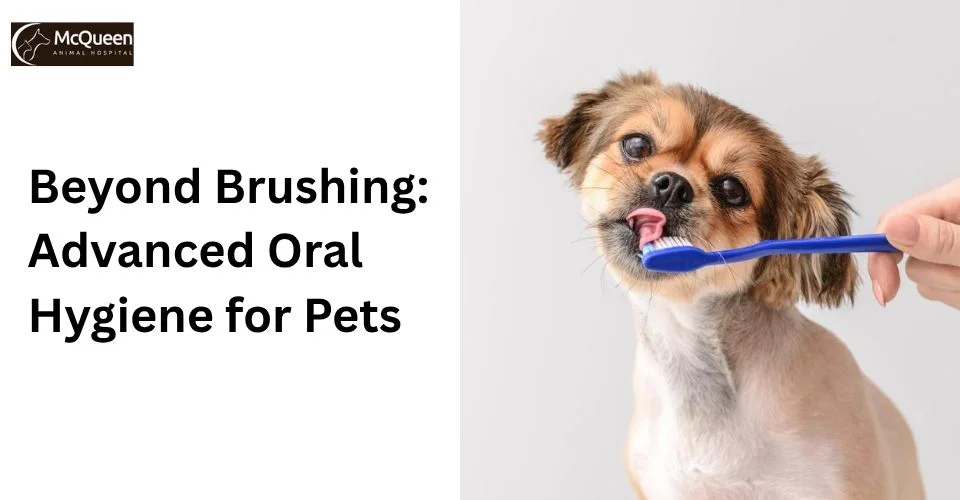
We all love our pets, but let’s be honest—bad breath can make those cuddle sessions a little less enjoyable. Many owners assume that if their pet is eating, their mouth must be healthy. However, dental disease is often silent and painful.
Just like humans, pets need more than just a quick brush of their teeth to maintain optimal health. They need advanced care to prevent serious issues down the road.
Taking care of your furry friend’s mouth goes far beyond fresh breath. It is about protecting their heart, liver, and kidneys. At McQueen Animal Hospital, we believe that educated owners make the best decisions for their pets. Let’s dive into why advanced oral hygiene is a non-negotiable part of pet care.
Why Oral Hygiene Matters Beyond the Mouth
You might wonder why veterinarians talk so much about teeth. The truth is, the mouth is the gateway to the body. When bacteria build up on the teeth and gums, they don’t just stay there. They enter the bloodstream.
Once in the blood, these bacteria can travel to major organs. Studies show a clear link between poor dental health and heart, liver, and kidney disease in dogs. This means that neglecting your dog’s teeth could actually shorten their lifespan.
It is a scary thought, but the good news is that this is largely preventable. Prioritizing Dog dental cleaning in Brampton is one of the most effective ways to protect your pet from these systemic health risks.
The Progression of Dental Disease
Dental problems usually follow a predictable path. If you catch it early, it is reversible. If you wait too long, the damage is permanent. Understanding this progression helps you know when to take action.
Plaque:
This is a soft, sticky film of bacteria that forms every day. It is invisible but is the root cause of all trouble.
Tartar:
If plaque isn’t removed, it hardens into tartar within days. You cannot brush this off; it requires professional tools.
Gingivitis:
This is inflammation of the gums caused by that tartar irritating the gum line. The gums look red and might bleed. This stage is still treatable.
Periodontal Disease:
If ignored, gingivitis turns into periodontal disease. This attacks the bone and structures holding the tooth. It is painful and leads to tooth loss.
Abscesses:
Severe infection can cause a pocket of pus at the tooth root, leading to swelling on the face.
Symptoms to Watch For
Pets are masters at hiding pain. In the wild, showing weakness is dangerous, so your dog or cat will likely suffer in silence. You need to play detective. Look for these subtle signs that your pet is struggling with their mouth:
Bad Breath:
While “dog breath” is common, a foul odor that smells rotten is a red flag.
Visible Build-up:
Look for yellow or brown crust on their teeth, especially near the gums.
Bleeding Gums:
You might see pink on their chew toys or in their water bowl.
Eating Changes:
Dropping food, chewing on one side, or suddenly refusing dry food are major indicators of pain.
Behavioral Shifts:
If your friendly pet snaps when you touch their face, they might be hurting.
Swelling:
Any lump on the face or below the eye could be an abscess requiring immediate attention.
The Necessity of Professional Cleaning
Brushing at home is fantastic, but it has limits. Once tartar has formed, a toothbrush simply cannot remove it. Think of it like a rock stuck to the tooth; no amount of brushing will budge it. This is where professional help comes in.
A proper cleaning does more than just whiten teeth. It removes the infection below the gum line where it matters most. However, there is a catch. To do a thorough job, we must go under the gums. This is impossible to do safely on an awake animal.
Anesthesia is required to ensure a complete assessment and cleaning without pain or fear. Finding reliable Vets in Brampton who prioritize safe anesthesia protocols is essential for this procedure.
Understanding COHAT: The Gold Standard
You might hear the term COHAT thrown around at your veterinary clinic. It stands for Complete Oral Health Assessment and Treatment. This is not just a “cleaning”; it is a comprehensive dental procedure.
Under anesthesia, we can take X-rays to see what is happening below the gum line. Surprisingly, most dental disease is hidden there. We probe every tooth to check for pockets.
We scale above and below the gum line to remove all tartar. Finally, we polish the teeth to make them smooth and resistant to future plaque. This thorough approach is what sets professional Dog dental cleaning in Brampton apart from a simple cosmetic scrape.
Why Anesthesia is Non-Negotiable
Some places offer “anesthesia-free cleanings.” While this sounds appealing, it can be dangerous. It only cleans the visible part of the tooth. It leaves the bacteria below the gum line untouched, which is like painting over a rotten piece of wood.
Furthermore, it can be stressful for your pet to have sharp instruments in their mouth while they are awake. Anesthesia allows us to perform a meticulous exam, clean every surface, and extract any painful teeth safely. Your pet’s safety and comfort are always our top priority. We tailor the anesthesia to your pet’s specific health needs to ensure they wake up quickly and comfortably.
Home Care: What You Can Do
While professional cleanings are vital, what you do at home matters too. You wouldn’t stop brushing your teeth just because you see the dentist twice a year, right? The same goes for your pets.
Daily Brushing:
This is the gold standard. Use pet-safe toothpaste (human toothpaste is toxic to them).
Dental Chews:
Look for treats approved by the Veterinary Oral Health Council (VOHC).
Dental Diets:
Some kibble is specially formulated to scrub the teeth as your pet chews.
Water Additives:
These can help reduce bacteria, but they are not a cure-all.
Combining these home habits with regular professional check-ups creates a strong defense against dental disease. If you notice any of the symptoms mentioned earlier, it is time to search for experienced Vets in Brampton to get help.
When to See a Vet Immediately
Some situations cannot wait for the next scheduled check-up. If you spot any of the following, you should contact your vet right away:
- Bleeding from the mouth that doesn’t stop.
- A broken tooth or a tooth that is loose.
- Sudden swelling on the face, especially under the eye.
- Your pet stops eating completely or drools excessively.
These are signs of an emergency, such as a severe abscess or oral trauma. Early intervention can save your pet from severe pain and more complicated treatments.
Why Choose McQueen Animal Hospital for Your Pet’s Dental Health
Choosing the right clinic for your pet’s dental procedure is a big decision. Why Choose McQueen Animal Hospital for your pet’s oral care needs? Because we are founded entirely on the notion of providing the Brampton and Mississauga community with friendly, high-quality, and affordable veterinary care.
We treat your pets like family. Our team commits hundreds of hours annually to continuing education, ensuring we are always using the latest and most effective techniques.
From our compassionate staff to our advanced medical equipment, we are dedicated to the well-being of your pet. We strive to build a supportive community where you feel valued and your pets feel safe.
Conclusion:
Your pet’s dental health is a window into their overall well-being. Ignoring bad breath or dirty teeth can lead to serious health issues that affect their heart and kidneys. By combining advanced professional care with good home habits, you can add years to your pet’s life.
Don’t wait for the problem to get worse. Be proactive about their oral hygiene today. A healthy mouth means a happy, longer life for your best friend.
Ready to give your pet the gift of a healthy smile? Book an appointment at McQueen Animal Hospital today for a comprehensive dental assessment!