
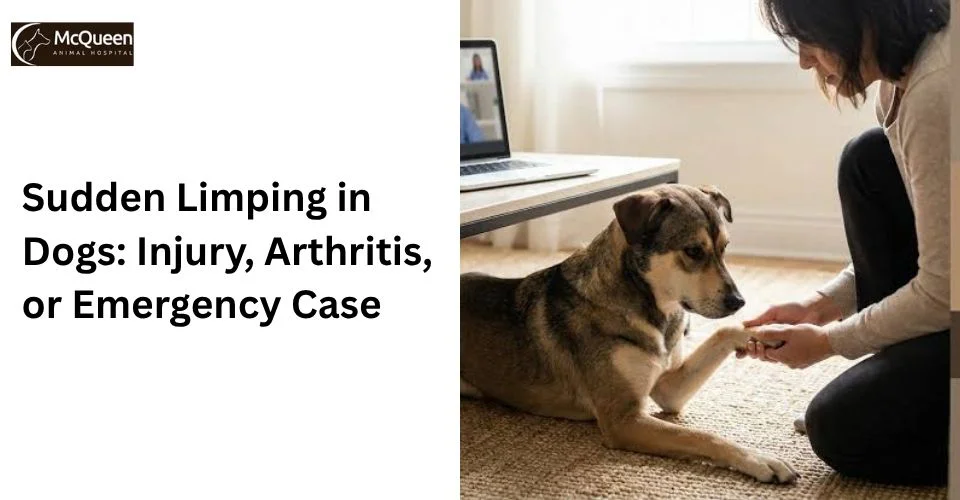
Sudden limping in dogs is one of the most common reasons pet owners rush to a veterinary clinic. While it may sometimes be caused by a minor sprain, it can also indicate serious conditions such as fractures, ligament tears, infections, or underlying joint disease.
The challenge for pet owners is not just noticing the limp, but understanding whether it can wait for a regular appointment or requires immediate emergency attention.
At Mcqueen, we focus on helping pet owners recognize early warning signs and respond appropriately so pets receive timely care, especially when conditions may worsen quickly.
Why Sudden Limping Should Never Be Ignored
A dog suddenly refusing to put weight on a leg is always a signal that something is wrong. The severity can vary widely, but the underlying cause is often painful and sometimes urgent.
Sudden limping may be associated with:
- Soft tissue injuries
- Paw pad wounds or foreign objects
- Ligament or tendon damage
- Joint dislocation
- Bone fractures
- Infections or abscesses
- Early-stage arthritis flare-ups
Even if the limp appears mild at first, conditions can worsen within hours.
Common Causes of Sudden Limping in Dogs
Understanding possible causes helps pet owners decide how urgently they need to seek veterinary care.
1. Minor Injuries or Strains
Dogs can injure themselves while:
- Running or jumping
- Playing at the park
- Slipping on smooth surfaces
- Landing awkwardly from heights
Signs include mild limping, but the dog may still bear some weight on the leg.
Often, these cases improve with rest, but only after proper assessment.
2. Paw Injuries and Foreign Objects
One of the most overlooked causes of limping is something stuck in the paw.
Common issues include:
- Thorns or glass fragments
- Small cuts or abrasions
- Burned paw pads in hot weather
- Torn nails
These injuries can look minor but cause significant pain.
Always check between toes and paw pads before assuming a joint issue.
3. Ligament or Muscle Tears
Active or larger breeds are more prone to ligament injuries such as:
- Cranial cruciate ligament (CCL) tears
- Muscle strains from sudden movement
- Tendon injuries from overexertion
These cases often result in:
- Sudden inability to bear weight
- Swelling around the joint
- Noticeable pain on movement
These injuries typically require veterinary diagnosis and sometimes surgery.
4. Arthritis Flare-Ups
In older dogs, sudden limping may be related to arthritis.
Unlike injuries, arthritis symptoms often include:
- Morning stiffness
- Gradual worsening over time
- Difficulty standing after rest
- Reduced activity levels
Although arthritis is chronic, flare-ups can appear sudden and painful.
5. Fractures or Serious Trauma
This is the most urgent cause of limping.
Fracture signs include:
- Complete refusal to use the limb
- Visible deformity
- Severe pain response
- Swelling or instability
Trauma-related limping is a veterinary emergency and requires immediate attention.
When Sudden Limping Becomes an Emergency
Not all limping requires panic, but certain signs indicate urgent veterinary care is needed.
Seek emergency care if you notice:
- Non-weight bearing on the leg
- Severe swelling or visible deformity
- Continuous crying or signs of extreme pain
- Bleeding from the paw or limb
- Suspected fracture or trauma
- Sudden limping after a fall or accident
- Accompanied fever or lethargy
In these cases, delaying treatment can significantly worsen outcomes.
What You Should Do Immediately at Home
Before reaching a vet, safe first-response steps can help prevent further injury.
Keep Your Dog Still
Limit movement to prevent worsening of the injury.
- Restrict walking or running
- Carry small dogs if needed
- Avoid letting them jump onto furniture
Inspect the Limb Carefully
Check for:
- Cuts or bleeding
- Swelling
- Foreign objects in the paw
- Broken nails
Do not force movement if your dog shows pain.
Apply Basic First Aid (If Safe)
- Use clean cloth for minor bleeding
- Apply light pressure if needed
- Avoid tight bandaging unless advised
Do not apply human pain medication unless directed by a vet.
Prepare for Transport
If the limp appears severe:
- Use a blanket or towel for support
- Keep your dog calm and warm
- Avoid unnecessary movement during transport
Mcqueen emphasizes that safe transport is critical in preventing further damage before veterinary assessment.
How Vets Diagnose Sudden Limping
At a veterinary clinic, diagnosis typically includes:
- Physical orthopedic examination
- Palpation of joints and muscles
- X-rays for fractures or joint issues
- Ultrasound for soft tissue injuries
- Blood tests if infection or inflammation is suspected
Early diagnosis helps determine whether treatment involves rest, medication, or surgical intervention.
Treatment Options Based on Cause
Treatment depends entirely on diagnosis.
Minor Injuries
- Rest and restricted activity
- Anti-inflammatory medication
- Cold compresses
Ligament or Joint Issues
- Pain management
- Physiotherapy
- Possible surgery for severe tears
Fractures
- Splinting or casting
- Surgical correction in complex cases
- Extended recovery and monitoring
Arthritis
- Long-term pain control
- Weight management
- Joint supplements and lifestyle adjustments
Preventing Future Limping Episodes
While not all injuries are preventable, risk can be reduced through:
- Regular exercise with controlled intensity
- Avoiding slippery surfaces
- Maintaining healthy body weight
- Routine vet checkups
- Proper paw care and inspection after walks
- Joint supplements for senior dogs
Preventive care plays a major role in reducing mobility issues over time.
How Mcqueen Supports Pet Owners in Emergencies
At Mcqueen, we understand how stressful sudden limping can be for pet owners. Our approach focuses on awareness, early response, and safe decision-making when pets show signs of pain or injury.
We help guide owners to:
- Recognize emergency warning signs
- Stabilize pets safely before transport
- Avoid actions that worsen injuries
- Seek timely veterinary intervention
While home care is important in the first moments, professional veterinary diagnosis remains essential for proper recovery.
Final Thoughts
Sudden limping in dogs can range from a simple paw irritation to a serious orthopedic emergency. The key is not to guess, but to observe carefully and act quickly when warning signs appear.
If your dog shows persistent or severe limping, especially after trauma or without improvement, immediate veterinary evaluation is the safest choice.
With proper attention and timely care, most causes of limping can be successfully treated, allowing your dog to return to normal activity with comfort and confidence.
Mcqueen encourages every pet owner to treat sudden limping as a signal, not just a symptom, and respond with caution, care, and prompt veterinary support when needed.