
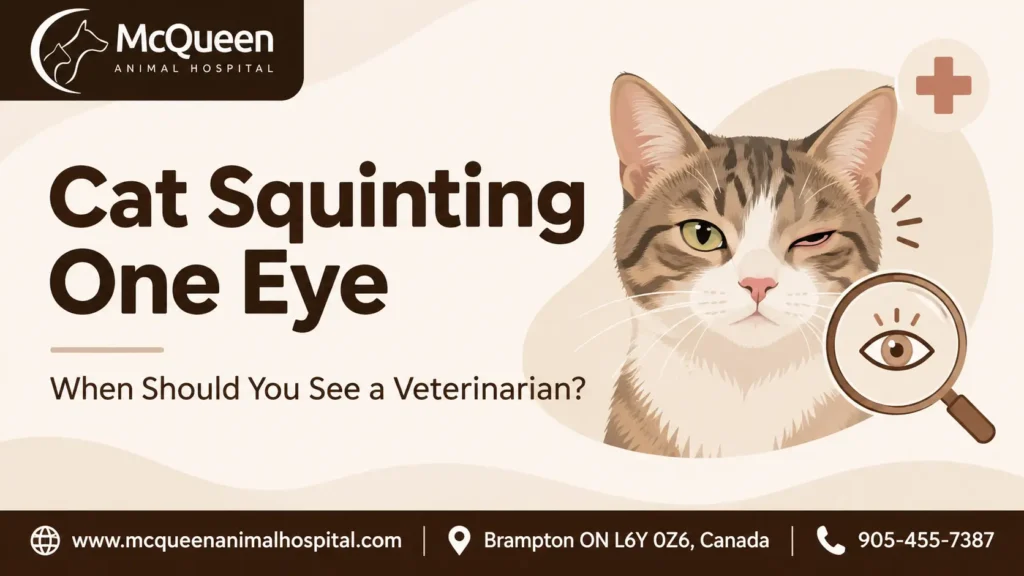
If your cat is squinting one eye, it may be experiencing pain, irritation, or an eye injury. Sudden or persistent squinting should be checked by a veterinarian, ideally the same day, even if there is no redness or discharge. If your cat is keeping one eye completely closed, showing severe discomfort, or experiencing changes in vision, seek immediate veterinary care.
A brief squint in bright light or after exposure to dust may be temporary. However, if your cat repeatedly blinks, holds one eye partly closed, or continues squinting indoors, something may be wrong. Eye problems can worsen quickly, and an examination is often needed to identify the cause.
Why Is My Cat Squinting Only One Eye?
Squinting is often a protective response to discomfort. When only one eye is affected, the irritation or underlying condition may be limited to that eye.
Common possibilities include:
- Corneal scratches or ulcers: A scratch from another cat, an object, or trapped debris can damage the clear surface of the eye. Even a small injury can be painful and difficult to see.
- Foreign material: Dust, hair, or plant particles can become trapped around the eye, causing blinking, tearing, and squinting.
- Conjunctivitis: Inflammation of the tissue lining the eyelids can cause redness, swelling, watery discharge, or repeated blinking. Infections, including feline herpesvirus, are among the possible causes.
- Inflammation inside the eye: Uveitis can cause pain, light sensitivity, and changes in the appearance of the pupil.
- Glaucoma: Increased pressure inside the eye can damage vision and requires urgent veterinary attention. McQueen Animal Hospital’s article on glaucoma in dogs and cats explains the associated symptoms, including squinting, cloudiness, and changes in pupil size.
These conditions can produce similar symptoms, so the cause cannot reliably be identified by appearance alone.
According to Cornell University College of Veterinary Medicine, corneal ulcers may cause squinting, sensitivity to light, and changes in vision. Some injuries can also become severe enough to threaten the affected eye.
Can a Cat Squint One Eye Without Redness or Discharge?
Yes. A cat squinting one eye with no discharge may still have a painful corneal injury or another eye condition. The absence of visible redness, swelling, or mucus does not mean the eye is healthy.
For example, a small corneal scratch may not be noticeable without special testing. Similarly, inflammation within the eye may cause discomfort before obvious external changes develop.
If your cat has one eye watering and squinting, the tears may be a response to irritation or injury. Clear, watery discharge does not necessarily indicate a minor problem.
Pay attention to how your cat behaves. Repeated blinking, avoiding bright light, rubbing the face, or holding the eye partly closed while resting can all suggest discomfort.
Even if your cat continues eating and playing normally, persistent or recurring squinting warrants a veterinary examination. For more information about subtle signs of discomfort, McQueen Animal Hospital also discusses commonly overlooked causes of pain in cats, including painful corneal injuries.
When Is a Cat Squinting One Eye an Emergency?
Not every brief squint requires emergency treatment, but certain symptoms indicate that your cat should be examined immediately.
Seek emergency veterinary care if your cat:
- Keeps one eye completely shut or cannot open it comfortably.
- Shows severe pain or repeatedly paws at the affected eye.
- Develops cloudiness, a blue-grey appearance, or a noticeable change in eye shape.
- Has unequal pupils or appears to have difficulty seeing.
- Has experienced a suspected eye injury, including a cat fight, scratch, or chemical exposure.
- Has blood in the eye, an obvious wound, or significant swelling.
These signs may indicate serious injury, inflammation, or increased pressure within the eye.
If your cat is squinting but has none of these emergency signs, contact your veterinarian for an examination the same day, particularly if the squinting persists or returns.
Do not wait several days to see whether a persistently squinting eye improves. Some superficial injuries can heal, but others may worsen or develop complications without appropriate care.
If severe symptoms develop outside your regular veterinarian’s operating hours, contact an emergency veterinary hospital.
What Will a Veterinarian Check?
A veterinarian will examine the affected eye and compare it with the other eye, looking for signs of injury, inflammation, foreign material, or changes in the cornea and pupils.
Depending on the findings, the examination may include:
- Fluorescein staining: A special dye helps reveal scratches or ulcers on the corneal surface that may otherwise be difficult to see.
- Eye-pressure testing: A tonometer measures pressure inside the eye when conditions such as glaucoma or uveitis are suspected.
- Examination of the eyelids and surrounding tissues: This helps identify trapped debris, abnormal eyelashes, or other sources of irritation.
The Merck Veterinary Manual describes how these tests help veterinarians identify abnormalities that may not be apparent during an initial visual examination.
The tests and treatment recommended will depend on the suspected cause. McQueen Animal Hospital offers veterinary eye care in Brampton, including eye examinations and eye-pressure assessment.
What Should You Do Before Your Cat’s Vet Appointment?
While arranging an examination, keep your cat indoors in a calm environment and try to prevent rubbing or scratching of the affected eye.
Avoid forcing the eyelids open or attempting to remove anything stuck in the eye. If your cat is pawing repeatedly, a properly fitted protective collar may help prevent additional injury.
Do not use human eye drops, leftover antibiotics, or previously prescribed eye medications without veterinary direction. Some medications, particularly those containing corticosteroids, can worsen corneal ulcers or interfere with healing.
You can observe whether the squinting is constant or intermittent and note any recent cat fights, injuries, or changes in behaviour. Share these details with your veterinarian.
For persistent one-eye squinting, McQueen Animal Hospital provides pet consultations and examinations at 8975 McLaughlin Road South, Brampton. Call 905-455-7387 to discuss your cat’s symptoms and arrange an assessment. For severe symptoms when the hospital is closed, seek an emergency veterinary facility.
Frequently Asked Questions
1. Why does my cat squint one eye only after waking up?
A cat may briefly narrow its eyes while waking or adjusting to light. However, if the same eye repeatedly remains partly closed after waking, it could indicate irritation or discomfort rather than normal sleepiness. If the squinting persists, recurs, or is accompanied by other symptoms, arrange a veterinary examination.
2. Why does my cat squint one eye on and off throughout the day?
Intermittent squinting can occur when discomfort varies with blinking, light exposure, or movement of the eyelids. A corneal injury, irritation, or inflammation may cause symptoms that come and go. Even if the eye appears normal between episodes, recurring squinting should be examined rather than dismissed.
3. My cat started squinting after playing or fighting with another cat. What should I do?
Arrange a veterinary examination promptly. A claw can scratch the cornea even when there is no visible wound or bleeding. An eye injury following a fight may be more serious than it initially appears. If your cat is holding the eye shut, has marked pain, or shows visible damage, seek immediate veterinary care.
4. Is my cat’s squinting eye contagious to other cats?
Squinting itself is not contagious, but some underlying causes, including certain infectious forms of conjunctivitis, can spread between cats. A scratch or foreign object is not contagious. Until the cause is identified, avoid sharing eye-cleaning materials between cats and wash your hands after handling eye discharge.
5. Why is my cat’s third eyelid showing in the squinting eye?
The third eyelid is a protective membrane near the inner corner of the eye. It may become more visible when a cat has eye pain, inflammation, or another problem affecting the eye. If it remains visible while your cat is awake, especially alongside squinting, a veterinary examination is recommended.
6. Can a kitten squint one eye because of an eye infection?
Yes. Kittens can develop eye infections that cause squinting, swelling, or discharge. However, an injury or corneal ulcer can produce similar symptoms. Because eye problems in kittens may become serious, contact a veterinarian promptly rather than attempting treatment with leftover medication or over-the-counter eye drops.
Medically reviewed by Dr. Harinder Babbar, DVM
Veterinarian & Medical Director, McQueen Animal Hospital, Brampton, OntarioThis article has been medically reviewed and is based on current evidence-based veterinary literature and clinical guidance.