
Dental health plays a major role in a dog’s overall well-being. Many pet owners focus on food, grooming, and exercise but overlook oral hygiene until problems become serious. Plaque buildup, bad breath, gum disease, and tooth infections can affect not only a dog’s mouth but also their long-term health.
As awareness around pet dental care continues growing, many owners are now exploring anesthesia-free teeth scaling as an alternative cleaning option. Pet owners searching for Dog dental cleaning Brampton often want safer, less stressful solutions for maintaining oral hygiene. At the same time, those researching the best vets Brampton are looking for clinics that prioritize both pet comfort and professional care.
At McQueen Animal Hospital, pet dental health is approached with careful evaluation, professional guidance, and personalized treatment recommendations based on each dog’s condition and needs.
Why Dental Care Is Important for Dogs
Dogs naturally develop plaque and tartar over time. Without proper cleaning, bacteria can accumulate along the gumline and eventually lead to serious oral health problems.
Poor dental hygiene may contribute to:
- Bad breath
- Gum inflammation
- Tooth loss
- Pain while eating
- Oral infections
- Bacteria entering the bloodstream
Dental disease can sometimes affect major organs such as:
- Heart
- Liver
- Kidneys
This is why routine dental care is considered an important part of preventive veterinary care.
What Is Anesthesia-Free Teeth Scaling?
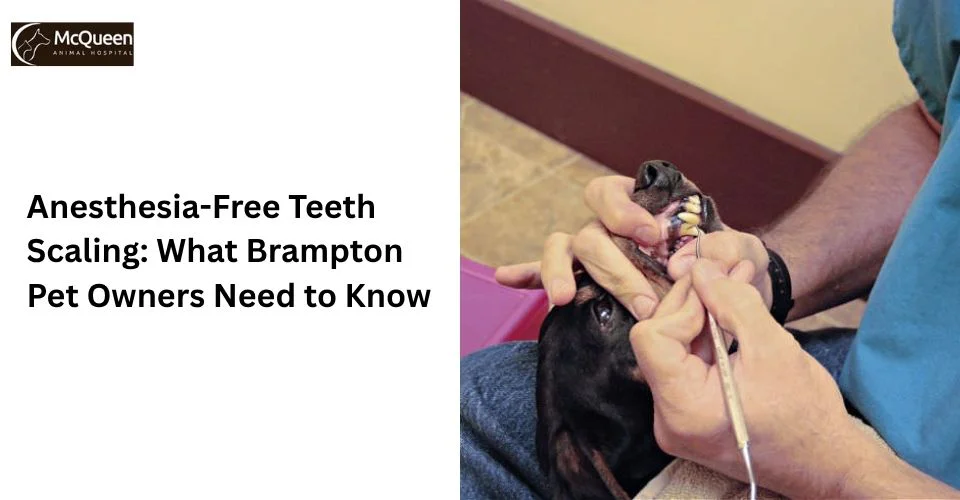
Anesthesia-free teeth scaling is a non-sedated dental cleaning procedure designed to remove visible tartar and plaque from a dog’s teeth while the pet remains awake.
The process generally focuses on:
- Surface tartar removal
- Teeth polishing
- Gumline cleaning above the surface
- Breath improvement
Unlike traditional dental procedures, anesthesia-free scaling does not involve sedation or general anesthesia.
Why Some Pet Owners Consider Anesthesia-Free Cleaning
Many dog owners are attracted to anesthesia-free cleaning because they worry about anesthesia risks, especially for:
- Older dogs
- Dogs with certain medical conditions
- Small breeds
- Anxious pets
Common reasons owners choose this option include:
- Faster appointments
- No recovery period
- Lower immediate cost
- Reduced sedation concerns
For some pets, anesthesia-free cleaning may provide cosmetic improvements in visible tartar buildup.
Understanding the Limitations
While anesthesia-free cleaning can improve tooth appearance, it is important for pet owners to understand its limitations.
A major portion of dental disease develops below the gumline where bacteria are not visible.
Without anesthesia, it is difficult to safely perform:
- Deep periodontal cleaning
- Dental X-rays
- Thorough gum examinations
- Tooth extractions
- Subgingival scaling
Dogs may also move unexpectedly during cleaning, limiting how thoroughly certain areas can be treated.
This is why veterinary professionals often evaluate each pet individually before recommending the most suitable dental care option.
Traditional Dental Cleaning vs. Anesthesia-Free Scaling
Both options serve different purposes depending on the dog’s dental condition.
Anesthesia-Free Cleaning May Help With
- Mild surface tartar
- Cosmetic cleaning
- Routine maintenance in selected cases
- Breath improvement
Traditional Veterinary Dental Cleaning Helps With
- Deep gum disease treatment
- Full oral examinations
- Dental X-rays
- Hidden infection detection
- Tooth removal if necessary
- Comprehensive cleaning under the gumline
Professional veterinary evaluation is important to determine which option is safest and most effective.
Signs Your Dog May Need Dental Care
Many dogs show signs of oral discomfort gradually.
Common Warning Signs Include
- Bad breath
- Yellow or brown tartar buildup
- Red or swollen gums
- Bleeding gums
- Difficulty chewing
- Pawing at the mouth
- Drooling excessively
- Loose teeth
- Reduced appetite
If these symptoms appear, veterinary assessment should not be delayed.
Are Some Dogs More Prone to Dental Problems?
Certain breeds are more likely to develop dental disease due to jaw size and tooth crowding.
Small breeds often experience dental issues earlier than larger dogs.
Examples include:
- Yorkshire Terriers
- Chihuahuas
- Pomeranians
- Toy Poodles
- Shih Tzus
Older dogs may also face increased tartar buildup and gum disease as they age.
Regular oral examinations help identify problems before they become severe.
The Role of Professional Veterinary Assessment
Before choosing anesthesia-free scaling, a proper oral health assessment is essential.
Veterinarians evaluate:
- Gum health
- Tooth stability
- Infection signs
- Pain indicators
- Hidden dental disease risk
Some dogs may appear fine externally while having serious problems beneath the gumline.
Professional assessment helps prevent incomplete treatment or overlooked infections.
How to Maintain Your Dog’s Dental Health at Home
Home care plays an important role in reducing plaque buildup between professional cleanings.
Helpful Dental Care Habits
Brush Your Dog’s Teeth Regularly
Using dog-safe toothpaste helps reduce plaque accumulation.
Use Dental Chews
Approved dental chews may help minimize tartar buildup.
Provide Proper Diet Support
Some veterinary diets are designed to support oral health.
Schedule Routine Checkups
Regular dental evaluations help identify issues early.
Watch for Behavioral Changes
Changes in eating or chewing habits may indicate oral discomfort.
Consistent preventive care often reduces the need for advanced dental procedures later.
Why Pet Owners Choose McQueen
Choosing the right veterinary clinic is important for both preventive care and long-term pet health.
Pet owners searching for the best vets Brampton often prioritize:
- Experienced veterinary care
- Personalized treatment recommendations
- Pet comfort
- Transparent communication
- Preventive health support
At McQueen Animal Hospital, dental care plans are tailored according to each dog’s age, health condition, and oral health needs.
The goal is not only cleaner teeth but also improved overall wellness and comfort.
Questions Pet Owners Should Ask Before Dental Cleaning
Before selecting any dental procedure, owners should ask:
- Is my dog healthy enough for anesthesia?
- Are dental X-rays recommended?
- Is gum disease already present?
- What type of cleaning is most suitable?
- How often should cleanings be scheduled?
- What aftercare is required?
Understanding these factors helps owners make informed decisions about their pet’s oral health.
The Importance of Early Prevention
Dental disease often progresses silently.
By the time visible symptoms appear, infection or discomfort may already be advanced.
Early prevention helps:
- Protect teeth longer
- Reduce oral pain
- Lower future treatment costs
- Improve overall quality of life
Routine dental care should be considered part of a dog’s long-term wellness plan.
Final Thoughts
Anesthesia-free teeth scaling can be an option for selected dogs with mild surface tartar and limited dental concerns. However, it is important for pet owners to understand that deeper dental disease often requires comprehensive veterinary treatment under anesthesia for accurate diagnosis and proper cleaning.
Pet owners searching for Dog dental cleaning Brampton should focus on professional evaluations that prioritize both safety and long-term oral health. Choosing experienced professionals among the best vets Brampton helps ensure dogs receive the most appropriate dental care based on their individual needs.
At McQueen Animal Hospital, pet dental health is approached with careful assessment, compassionate care, and preventive strategies designed to support healthier and happier lives for dogs.