
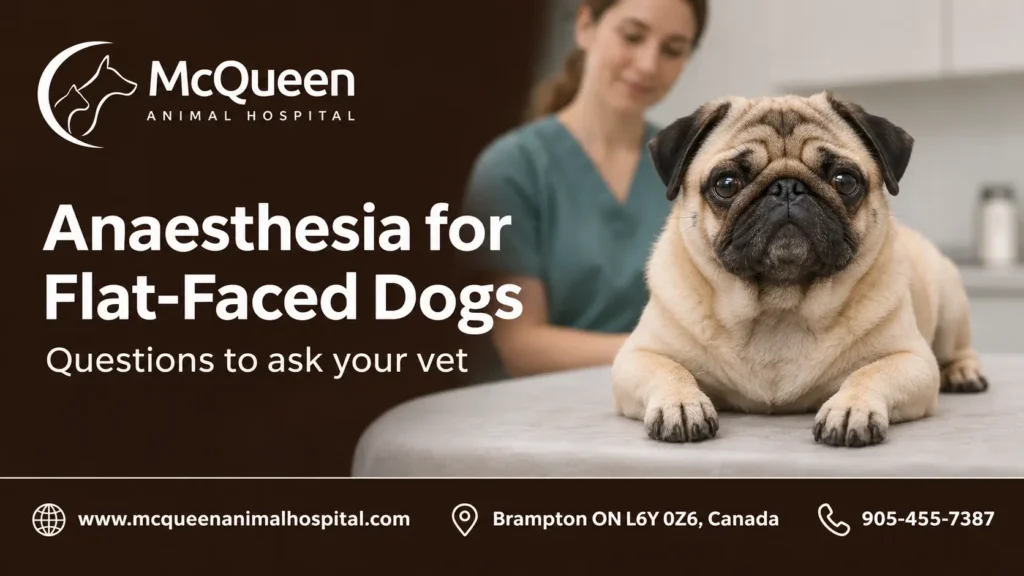
Flat-faced dogs can undergo anaesthesia, but a narrowed airway can make breathing harder as they go to sleep and again after the breathing tube comes out. If your pug, bulldog or French bulldog breathes noisily at rest, struggles to recover after a short walk, or had difficulty waking up from a previous anaesthetic, tell the clinic before procedure day. Ask “Given how my dog breathes now, should we go ahead as planned, assess the airway first, or consider referral?” The answer depends on your dog’s breathing history, examination and how urgently the procedure is needed.
If your dog is struggling to breathe at rest, has blue or grey gums or tongue, or collapses, seek emergency veterinary care immediately. If your regular clinic is closed, go to the nearest open emergency veterinary hospital.
Could my dog’s breathing change the plan?
“My dog has always snored. Does that matter?”
Tell your veterinarian if your flat-faced dog snores, especially if they also breathe noisily while awake, tire on short walks or take a long time to settle after activity. Describe when the noise happens and whether your dog seems to work harder to breathe. Mention any gagging, food or liquid coming back up, overheating or previous collapse. Heat and stress can increase panting and make breathing harder through a restricted airway, so let the clinic know if car rides or waiting rooms regularly set this off.
If the noise comes and goes, bring a short video taken when it happens naturally. Note what your dog was doing beforehand and how long it took them to settle. That context can help when your dog sounds different in the exam room. McQueen’s guide to recording symptoms for your veterinarian can help you organise what you’ve noticed.
“If the bloodwork is normal, could my dog still have an airway problem?”
Yes. Pre-anaesthetic bloodwork can help assess liver and kidney function. The airway needs its own assessment. Flat-faced, or brachycephalic, dogs can have narrow nostrils, a soft palate that extends into the throat or a narrower windpipe. Your veterinarian can assess the nostrils and breathing effort while your dog is awake. Getting a clear view of deeper structures, such as the soft palate, may require a separate airway examination.
If you’re preparing for surgery at McQueen, ask what the examination and any recommended tests could change. For an elective procedure, ask what findings would prompt further assessment, postponement or referral. If the procedure is time-sensitive, ask what waiting would mean for the condition being treated and what precautions the team would take if your dog needs care sooner.
How will the team manage my dog’s airway?
“What will you do if it’s difficult to place the breathing tube?”
Sedation can reduce the muscle tone that helps keep the throat open. In some brachycephalic dogs, the shape of the throat can also make the opening to the windpipe harder to see. For general anaesthesia, the team can place a breathing tube in the windpipe to deliver oxygen and assist breathing. Ask whether your dog would benefit from oxygen before going to sleep and what the team would do if placing the tube proved difficult.
“Who will monitor my dog’s breathing during the procedure?”
Ask who will monitor your dog and how they’ll check both oxygen levels and how effectively your dog is breathing. A pulse oximeter estimates blood oxygen saturation. Capnography measures carbon dioxide in exhaled breath to help assess how well air is moving in and out. The team also tracks heart rate, blood pressure and temperature. If your dog is having a procedure at McQueen, ask how the clinic’s anaesthesia monitoring will be adapted to your dog’s airway needs.
“Who will watch my dog after the breathing tube comes out?”
Once the tube is removed, air has to pass through your dog’s upper airway again. Ask what the team checks before removing the tube, who will watch your dog afterwards and how they’ll respond if your dog has trouble breathing. Also ask what would prompt longer observation or transfer. In a study of dogs undergoing surgery or diagnostic imaging, brachycephalic dogs were more likely to have complications after anaesthesia than other dogs. That makes recovery worth discussing even for procedures away from the throat.
What should I confirm before drop-off and pickup?
“When should I stop food, and what about water and medication?”
Ask for written instructions on the last meal, treats and chews, water, and any medicines your dog normally takes, especially those given with food. Tell the team if your dog regularly brings up food or liquid, since that material can enter the lungs around the time of anaesthesia. If your dog eats during the fasting period, call the clinic and say what they ate, how much and when. The team can decide whether to adjust the timing or the plan.
“What breathing changes should I act on after pickup?”
Before leaving, ask how your dog’s breathing during recovery compared with their usual breathing and whom to call if it changes at home. If your dog sounds noticeably noisier while resting but is still breathing comfortably, contact the treating team promptly. If they’re working hard to breathe, develop blue or grey gums or tongue, or collapse, seek emergency care immediately. Save the contact details of an open emergency hospital before pickup so you know where to go after hours. McQueen’s emergency care information
Conclusion
If you’re worried about whether your dog should go ahead with a procedure, ask for a preoperative discussion before drop-off. Bring notes on how your dog breathes at home and tell the veterinarian about any previous anaesthetic problems. Before you consent, make sure you understand what would change the timing of the procedure, how the team will manage your dog’s airway, and what they need to see in recovery before your dog goes home.
Frequently asked questions
Is sedation alone safer than general anaesthesia for a flat-faced dog?
It depends on the procedure, the depth of sedation needed and your dog’s airway. Deep sedation can make it harder for a dog to keep their airway open, and a breathing tube may be absent. For professional dental cleaning and extractions, AAHA recommends general anaesthesia with a breathing tube and appropriate monitoring.
Does previous surgery to widen my dog’s nostrils or shorten their soft palate lower the risk?
It may. A small retrospective study found that corrective airway surgery may reduce complications during later anaesthetics. Tell your veterinarian what was done, which breathing problems improved and which are still present. That helps them assess how your dog breathes today.
Should I combine two procedures to avoid a second anaesthetic?
Ask how much time the second procedure would add and whether it’s needed now. Combining procedures avoids a separate induction and recovery, but it may mean spending longer under anaesthesia. Longer anaesthetic duration was associated with more complications in a study that included brachycephalic dogs. Your veterinarian can weigh that trade-off for your dog and the procedures you’re considering.
My dog developed a new cough the day before the procedure. Should I still bring them in?
Call the clinic before leaving home. Explain when the cough started and whether your dog’s breathing, energy or appetite has changed. The clinic can tell you whether to come in for an examination and whether the new symptom could change the plan for an elective procedure.
What records should I request if my dog had trouble with anaesthesia at another clinic?
Ask the previous clinic to send the anaesthetic chart and recovery notes to the veterinarian planning the procedure. These can help clarify whether the team had difficulty placing the breathing tube, whether your dog needed oxygen or other breathing support after tube removal, and what helped them recover. If the records aren’t available yet, tell the new team what you remember so they can follow up before procedure day.
Medically reviewed by Dr. Harinder Babbar, DVM
Veterinarian & Medical Director
McQueen Animal Hospital, Brampton, OntarioThis article has been medically reviewed and is based on current evidence-based veterinary literature and clinical guidance.