
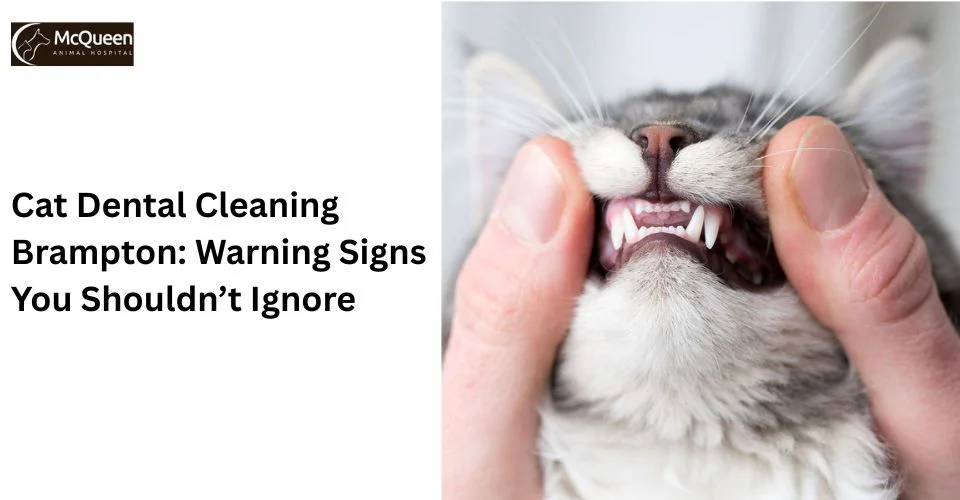
Cats are very good at hiding pain. That is one reason dental problems often go unnoticed until they become serious. A cat may still eat, play, and purr while dealing with tooth pain, inflamed gums, or infection. By the time the signs become obvious, the issue may already need professional treatment.
If you are looking for cat dental cleaning in Brampton, knowing the warning signs early can make a big difference. Regular oral care helps protect your cat’s comfort, appetite, and overall health. A trusted vet clinic in Brampton can check for dental disease, explain treatment options, and help you decide when cleaning is needed.
Why Cat Dental Health Matters
A cat’s mouth does more than hold teeth. It affects eating, grooming, mood, and even how well your cat feels day to day. Dental disease is common in cats, especially as they get older, and it can lead to pain, tooth loss, and infection if ignored.
Plaque and tartar can build up on the teeth over time. When this happens, bacteria can spread under the gumline and damage the tissues that support the teeth. In severe cases, the infection can affect other parts of the body too.
Good dental care helps with:
- Reducing mouth pain
- Preventing gum disease
- Protecting teeth from decay and loosening
- Supporting healthy eating
- Lowering the risk of infection
- Improving your cat’s quality of life
Warning Signs You Shouldn’t Ignore
Cats rarely complain directly about dental pain, so the signs are usually subtle at first. If you notice any of the symptoms below, it is a good idea to book a dental checkup soon.
1. Bad breath that does not go away
A mild smell is normal, but strong or sour breath is not. Persistent bad breath often points to plaque buildup, gum disease, or infection. It is one of the earliest signs that your cat may need dental care.
2. Drooling more than usual
Cats do not normally drool heavily. If your cat is drooling, especially if the saliva seems thick, stringy, or blood-tinged, there may be dental pain, a mouth wound, or inflammation.
3. Trouble eating or chewing
A cat with tooth pain may still want food but struggle while eating. You may notice:
- Eating more slowly
- Dropping food from the mouth
- Chewing on one side only
- Preferring soft food
- Refusing kibble
- Walking away from the bowl unfinished
These changes are important because they often mean your cat is uncomfortable.
4. Pawing at the mouth
If your cat keeps rubbing its face or pawing at the mouth, something may be bothering them. This can be a sign of tooth pain, a broken tooth, gum irritation, or something stuck in the mouth.
5. Red, swollen, or bleeding gums
Healthy gums should look pink, not bright red or puffy. Bleeding gums, swelling, or tenderness are common signs of gingivitis or periodontal disease. This is one of the clearest reasons to contact a vet clinic in Brampton.
6. Visible tartar on the teeth
Yellow or brown buildup near the gumline is often plaque that has hardened into tartar. Tartar can trap bacteria and make gum disease worse. If you can see it, your cat likely needs a dental exam.
7. Tooth loss or loose teeth
Adult cats should not lose teeth naturally. A loose or missing tooth may mean advanced dental disease or injury. This should never be ignored because it can be painful and may lead to infection.
8. Bad grooming or messy coat
Cats with mouth pain may stop grooming properly because moving their jaw hurts. You may notice a greasy coat, tangled fur, or reduced self-cleaning around the face and body.
9. Changes in behavior
Dental pain can affect mood. A cat that is uncomfortable may become quieter, more withdrawn, or more irritable. Signs can include:
- Hiding more than usual
- Avoiding being touched around the face
- Sudden grumpiness
- Less interest in play
- Reduced social interaction
10. Weight loss
If your cat is eating less because chewing hurts, weight loss can happen over time. Even slow weight loss matters, especially in older cats. It can signal an underlying issue that needs attention.
What Causes Dental Problems in Cats?
Several issues can lead to the need for cat dental cleaning in Brampton. Some of the most common include:
- Plaque and tartar buildup
- Gingivitis
- Periodontal disease
- Broken or fractured teeth
- Tooth resorption
- Mouth infections
- Retained baby teeth in younger cats
Some cats are more prone to dental disease than others, especially as they age. Regular veterinary exams help catch problems before they become severe.
When a Dental Cleaning May Be Needed
A professional dental cleaning may be recommended if your cat has visible tartar, inflamed gums, bad breath, or signs of pain. In many cases, a cleaning is done under anesthesia so the vet can thoroughly clean both above and below the gumline and examine the teeth properly.
Your vet may also recommend dental X-rays to check for hidden issues that cannot be seen during a simple visual exam. This is important because many feline dental problems develop below the surface.
What Happens During a Cat Dental Cleaning
Many pet owners feel nervous about the procedure, but professional dental cleaning is a common and important part of cat care. While every clinic may handle things slightly differently, the process often includes:
- A full oral exam
- Pre-anesthetic screening
- Cleaning and scaling the teeth
- Polishing the tooth surfaces
- Dental X-rays if needed
- Treatment or removal of damaged teeth
- Recovery monitoring
A good vet clinic in Brampton will explain each step and discuss any findings with you clearly. The goal is not just cleaner teeth, but a healthier mouth and less pain for your cat.
How to Protect Your Cat’s Teeth at Home
Home care cannot replace professional cleanings, but it can help support your cat’s oral health between vet visits. A few simple habits may help reduce plaque buildup and make dental issues easier to catch early.
Try these steps:
- Brush your cat’s teeth with pet-safe toothpaste if they allow it
- Offer dental treats or dental diets recommended by your vet
- Check the mouth gently for redness, swelling, or odor
- Watch for changes in eating, grooming, or behavior
- Schedule regular veterinary checkups
Even if your cat will not tolerate brushing, routine monitoring still matters. Catching dental disease early can save your cat pain later.
When to Call a Vet
You should contact a vet as soon as you notice warning signs like bad breath, bleeding gums, trouble eating, or visible tartar. Do not wait for the problem to “go away.” Dental issues usually get worse over time, not better.
A cat that is no longer eating well or seems to be in pain should be seen promptly. Early treatment is often easier, safer, and more effective than waiting until the condition becomes advanced.
Final Thoughts
Cats are experts at hiding discomfort, which is why dental problems can go unnoticed for so long. Paying attention to the warning signs can help you protect your cat from unnecessary pain and more serious health problems later.
If you have been searching for cat dental cleaning Brampton, the best next step is to schedule an exam with a trusted vet clinic in Brampton. The team at MCQueen can help identify dental concerns early and guide you toward the right care for your cat’s needs.
A healthy mouth can make a big difference in your cat’s comfort, appetite, and daily life. Watching for the signs now can help prevent bigger problems later