
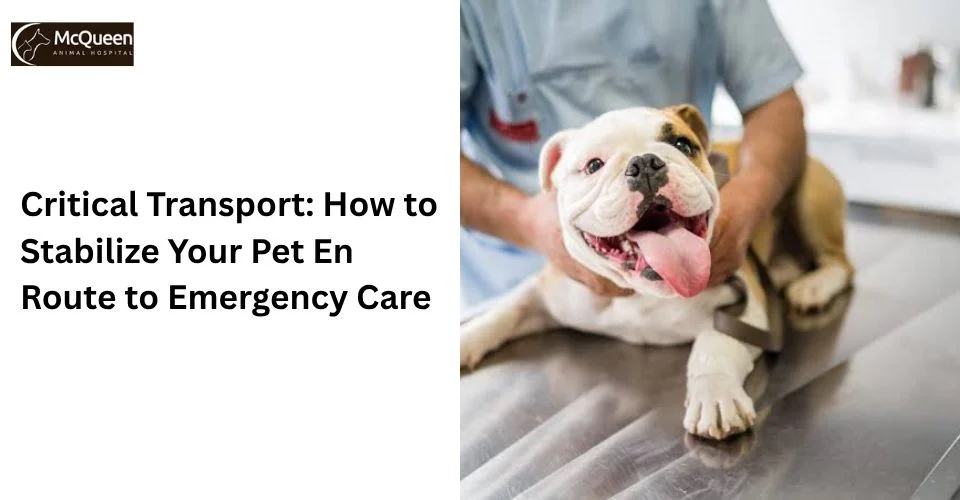
When a pet emergency happens, every minute matters. Whether it’s sudden trauma, difficulty breathing, seizures, poisoning, or severe injury, the way you handle the first few moments, and the transport to an emergency vet in Brampton, can significantly affect your pet’s outcome.
In these situations, calm action is more important than speed alone. Knowing how to stabilize your pet safely before reaching a clinic can help prevent the condition from worsening and give veterinary professionals the best chance to treat them effectively.
At Mcqueen, we understand that emergencies are stressful and unpredictable. This guide is designed to help pet owners respond confidently while heading toward the best vet in Brampton for urgent care.
Understanding a Pet Emergency
A pet emergency is any situation where immediate veterinary attention is required to prevent serious harm or death. Unlike routine health issues, emergencies escalate quickly and should never be delayed.
Common emergency situations include:
- Difficulty breathing or choking
- Severe bleeding or trauma
- Poison ingestion
- Sudden collapse or unconsciousness
- Seizures or uncontrolled shaking
- Heatstroke or overheating
- Severe vomiting or diarrhea with weakness
In these cases, your primary goal is not treatment at home, but stabilization until you reach professional care.
Step 1: Stay Calm and Assess the Situation
Your pet can sense panic, and stress may worsen their condition. The first step is to remain as calm as possible.
Quick assessment includes:
- Is the pet breathing normally?
- Is there visible bleeding or injury?
- Are they conscious and responsive?
- Are they able to move or stand?
If the condition appears life-threatening, contact an emergency vet in Brampton immediately while preparing for transport.
Step 2: Safe Handling Before Transport
Improper handling can worsen injuries, especially in cases of fractures or spinal trauma.
How to safely move your pet:
- Approach slowly and avoid sudden movements
- Use a blanket or towel to gently lift small pets
- Support both head and body when lifting
- Avoid bending or twisting the spine
- Use a firm surface like a board or carrier if available
If your pet is aggressive due to pain, use caution and avoid direct handling of the injured area.
Step 3: Controlling Bleeding and Visible Injuries
If there is external bleeding, immediate pressure is key.
Basic bleeding control steps:
- Apply clean cloth or gauze directly on the wound
- Maintain steady pressure without frequent checking
- Elevate the injured area if possible
- Do not remove embedded objects
- Avoid using ointments or disinfectants before vet evaluation
Even if bleeding appears controlled, urgent veterinary care is still required.
Step 4: Managing Breathing Difficulties
Breathing issues are extremely serious and require fast action.
While transporting your pet:
- Keep the airway open and unobstructed
- Ensure the neck is not bent or compressed
- Avoid forcing water or food
- Keep the pet in a well-ventilated space
- Minimize movement and stress
If choking is suspected, do not blindly attempt to remove objects unless clearly visible and safe.
Step 5: Handling Seizures During Transport
Seizures can be frightening, but they often resolve within minutes.
What to do:
- Do not restrain your pet
- Move objects away to prevent injury
- Place soft padding around them
- Time the seizure if possible
- Keep the environment quiet and dark
After the seizure, pets may be disoriented, so gentle handling is essential while heading to the vet.
Step 6: Preparing for Transport to the Vet
Once stabilized, transport should be as smooth and safe as possible.
Best practices:
- Use a secure carrier for small pets
- Line the carrier with soft bedding
- Keep the vehicle temperature comfortable
- Avoid sudden braking or sharp turns
- Have someone accompany you if possible
If you are searching for the best vet in Brampton, prioritize clinics that offer 24/7 emergency services and critical care support.
Step 7: What NOT to Do During Pet Emergencies
Well-intentioned actions can sometimes worsen the situation.
Avoid:
- Giving human medication without veterinary instruction
- Feeding food or water during distress
- Delaying transport to “observe symptoms”
- Attempting complex wound treatment at home
- Over-handling injured limbs or spine
The safest approach is stabilization and immediate professional care.
Why Emergency Vet Access in Brampton Matters
In fast-moving emergencies, proximity and preparedness matter.
An emergency vet in Brampton can provide:
- Oxygen therapy for breathing distress
- IV fluids for shock or dehydration
- Pain management and sedation
- Emergency surgery if required
- Diagnostic imaging (X-rays, ultrasound)
- Intensive monitoring and stabilization
Choosing a clinic equipped for urgent cases ensures faster intervention and better outcomes.
How Mcqueen Supports Pet Owners in Emergencies
At Mcqueen, we recognize that pet emergencies are overwhelming and often unpredictable. Our focus is on guiding pet owners with clear, practical steps that help stabilize pets before they reach professional veterinary care.
We emphasize:
- Calm decision-making during emergencies
- Safe handling techniques for injured pets
- Awareness of critical symptoms
- Preparedness for fast transport
- Understanding when immediate veterinary care is necessary
While home stabilization is important, Mcqueen strongly advises that all serious symptoms be evaluated by a qualified veterinary professional as soon as possible.
Tips to Be Prepared Before an Emergency Happens
Preparation can significantly reduce panic during critical moments.
Keep a pet emergency kit:
- Gauze and clean cloths
- Pet carrier or transport box
- Contact number of emergency vet in Brampton
- Blanket or towel for stabilization
- Muzzle (for safety in painful situations)
Know your nearest vet locations:
Research in advance where the best vet in Brampton is located, especially those offering 24/7 emergency care.
Monitor high-risk pets:
Senior pets, breeds with chronic conditions, or animals with previous health issues may require faster response times.
Final Thoughts
Pet emergencies require fast thinking, calm handling, and immediate access to veterinary care. Knowing how to stabilize your pet during transport can make a critical difference before reaching an emergency vet in Brampton.
From controlling bleeding to managing breathing issues and safely transporting your pet, each step plays a role in preventing further harm.
At Mcqueen, our goal is to help pet owners stay prepared, act confidently, and understand the importance of professional emergency care. While home stabilization techniques are valuable, timely intervention at a qualified veterinary clinic remains the most important factor in your pet’s survival and recovery.