
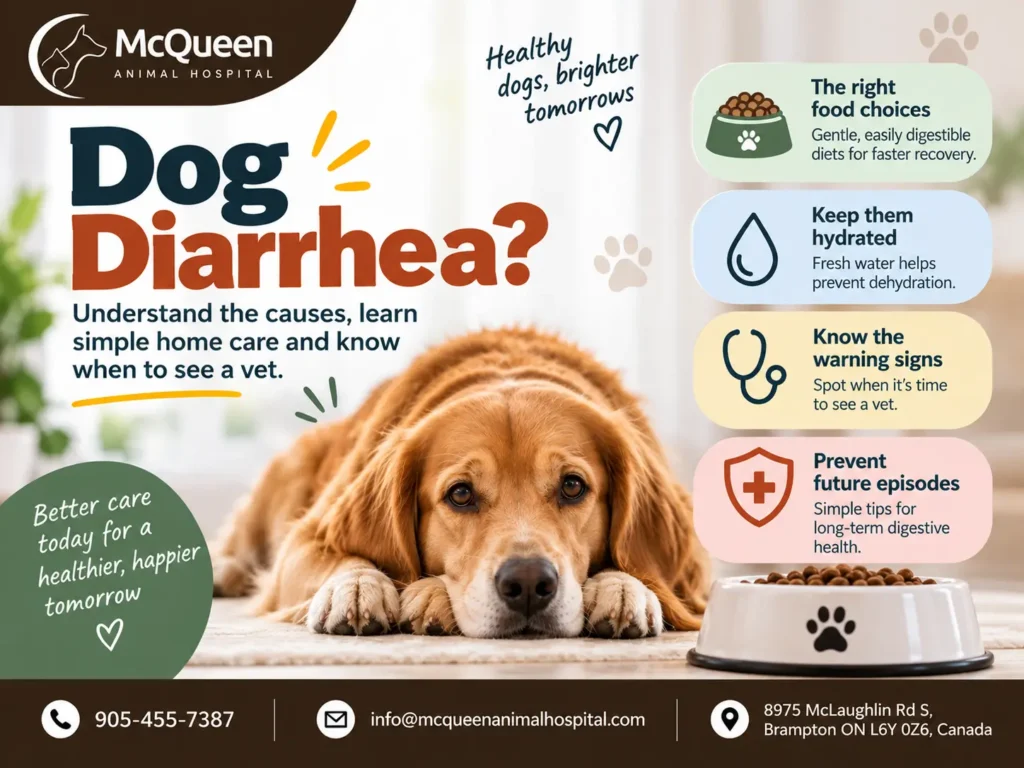
If your dog has diarrhea, the right response depends on how severe it is and whether other symptoms are present. Mild dog diarrhea in an otherwise healthy, alert adult dog may improve with fresh water, appropriate easily digestible food, and close monitoring. However, repeated or watery diarrhea, blood or black stool, vomiting, weakness, dehydration, pain, or loss of appetite can indicate a more serious problem and should be evaluated by a veterinarian.
Dog diarrhea treatment is not one-size-fits-all. A dog having diarrhea may have a simple upset stomach from a food change or eating something unusual, but parasites, infections, toxins, pancreatitis, or an intestinal blockage can also be responsible. For dog food for diarrhea, a veterinarian may recommend a highly digestible gastrointestinal diet or another suitable short-term diet. Diarrhea medication for dogs should only be used when recommended by a veterinarian, since medications that help one condition may be inappropriate for another. This guide explains what to do when your dog has diarrhea, what food may be appropriate, how to provide safe home care, and when veterinary attention is needed.
What causes diarrhea in dogs?
Diarrhea occurs when food and fluid move through the gastrointestinal tract too quickly or the intestines cannot absorb water normally. Because it is a symptom rather than a specific disease, there are many possible causes.
One of the most common is dietary indiscretion. Dogs are naturally curious eaters and may consume table scraps, garbage, spoiled food, unfamiliar treats, or something they find outdoors. A sudden change in their normal food can also upset digestion, particularly when the new diet is introduced too quickly.
Other relatively common causes include stress, intestinal parasites, food intolerance, and infections. A dog may develop loose stool after boarding, traveling, visiting a new environment, or experiencing another disruption to its routine. Parasites can cause either short-term or recurring diarrhea, while viral or bacterial infections can produce diarrhea along with vomiting, poor appetite, lethargy, or fever. For more information, see intestinal parasites that cause diarrhea in dogs.
More serious causes are also possible. These include swallowing a foreign object, exposure to toxins, pancreatitis, inflammatory gastrointestinal disease, disorders affecting other organs, and some cancers. This is why recurring or severe diarrhea should not simply be treated as an upset stomach without considering what may be causing it.
How to tell whether your dog’s diarrhea is mild or concerning
The number of loose stools matters, but your dog’s overall condition is often a more useful indicator of how seriously to take the problem.
A dog having diarrhea once or twice while remaining bright, comfortable, hydrated, and interested in food may simply have a temporary digestive upset. On the other hand, frequent watery diarrhea combined with vomiting, weakness, unusual sleepiness, abdominal pain, refusal to eat or drink, or other changes in behavior deserves prompt veterinary attention. If you notice changes in stool consistency or appearance, understanding abnormal stool and diarrhea in dogs can help you recognize when changes may need closer attention.
The appearance of the stool can provide another important clue. Fresh red blood should not be ignored, while black or tarry stool can indicate digested blood from higher in the gastrointestinal tract. Diarrhea accompanied by repeated vomiting is also concerning because both problems increase fluid loss and can lead to dehydration.
Puppies, older dogs, and dogs with existing health problems may need attention sooner than otherwise healthy adult dogs. Puppies in particular can become seriously ill from gastrointestinal infections, so repeated diarrhea in a young dog should not be managed casually. Certain infections, including Giardiasis and gastrointestinal symptoms in dogs, can also contribute to digestive problems and persistent diarrhea.
Dog diarrhea treatment at home: what you can do
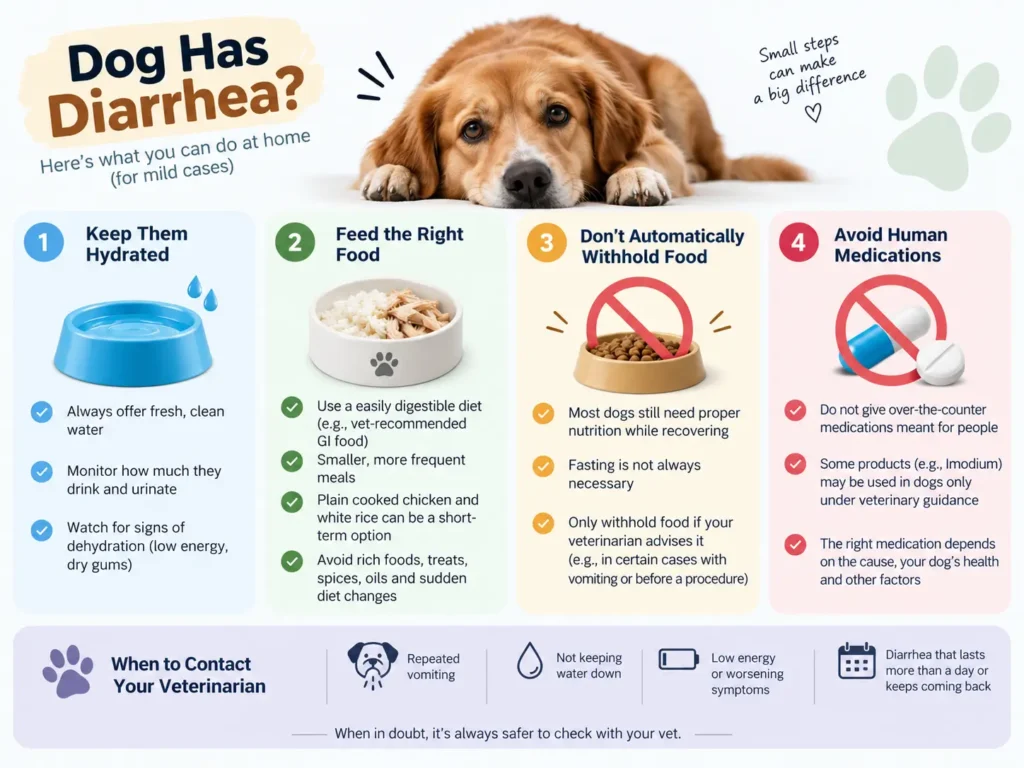
For a healthy adult dog with mild diarrhea and no other concerning symptoms, supportive care may be appropriate while you monitor closely.
Keep your dog hydrated
Fresh water should always be available. Diarrhea causes additional fluid loss, and dehydration can become a significant problem if diarrhea is frequent or prolonged. If your dog is vomiting repeatedly or cannot keep water down, don’t try to manage the situation solely at home; contact a veterinarian.
Pay attention to how much your dog is drinking and urinating as well as whether their energy level changes. These details can help you recognize that a seemingly simple episode is becoming more serious.
What to feed a dog with diarrhea
When people search for dog food for diarrhea, they are usually looking for something that will settle the stomach without making the digestive problem worse. For mild gastrointestinal upset, veterinarians may recommend a highly digestible gastrointestinal diet, often fed in smaller and more frequent meals. Veterinary therapeutic diets are formulated specifically for digestive problems and can be preferable to relying on homemade food, particularly when a dog needs nutritional support beyond a very short period.
Traditional home advice often includes plain cooked chicken with white rice. Some veterinarians may still recommend a short-term bland diet for an otherwise healthy dog, but it is important to understand its limitations. Chicken and rice is not nutritionally complete or balanced for long-term feeding, and it should not be used if your dog has an intolerance or allergy to either ingredient.
Whichever diet your veterinarian recommends, avoid rich foods, table scraps, excessive treats, oils, spices, and sudden dietary changes while your dog’s digestive system is recovering. Once stools return to normal, transition back to the regular diet gradually rather than making another abrupt change.
If diarrhea repeatedly follows a particular food or occurs whenever you change diets, that pattern is worth discussing with your veterinarian rather than repeatedly switching foods on your own.
Don’t automatically fast your dog
Older advice sometimes recommends withholding food whenever a dog develops diarrhea. Current veterinary nutrition guidance is more nuanced: dogs with gastrointestinal upset generally still need appropriate nutrition during recovery, although a veterinarian may recommend temporarily withholding food in particular circumstances, such as certain cases involving significant vomiting or before a procedure.
For puppies and dogs with other medical conditions, do not make a fasting decision without veterinary advice.
Avoid human medications
It can be tempting to reach for an over-the-counter product when your dog has diarrhea, but human medication is not automatically safe for dogs.
Medications such as loperamide (Imodium) may sometimes be used in veterinary medicine, but their use in dogs is off-label and should be directed by a veterinarian. Whether a particular medication is appropriate depends on the suspected cause, the dog’s health, other medications, and individual risk factors.
The same principle applies to other over-the-counter products. Do not give your dog medication from your own medicine cabinet simply because it is marketed for diarrhea or stomach problems. Your veterinarian can determine whether medication is appropriate or whether treating the underlying cause is more important.
What is the right diarrhea medication for dogs?
There is no single diarrhea medication for dogs that is appropriate for every case.
If parasites are responsible, treatment may involve a deworming medication. Some dogs may benefit from a veterinarian-recommended probiotic or gastrointestinal diet. Depending on the underlying problem, a veterinarian may also prescribe anti-diarrheal medication, anti-nausea medication, fluids, or other supportive treatment.
The important distinction is that medication should follow an assessment of the likely cause. For example, slowing intestinal movement is not necessarily appropriate when diarrhea is associated with certain infections, toxins, or a possible obstruction. Loperamide in particular should only be used under veterinary direction.
If your dog is repeatedly having diarrhea, simply trying different medications can mask symptoms while the underlying problem continues.
When should you take a dog with diarrhea to the veterinarian?
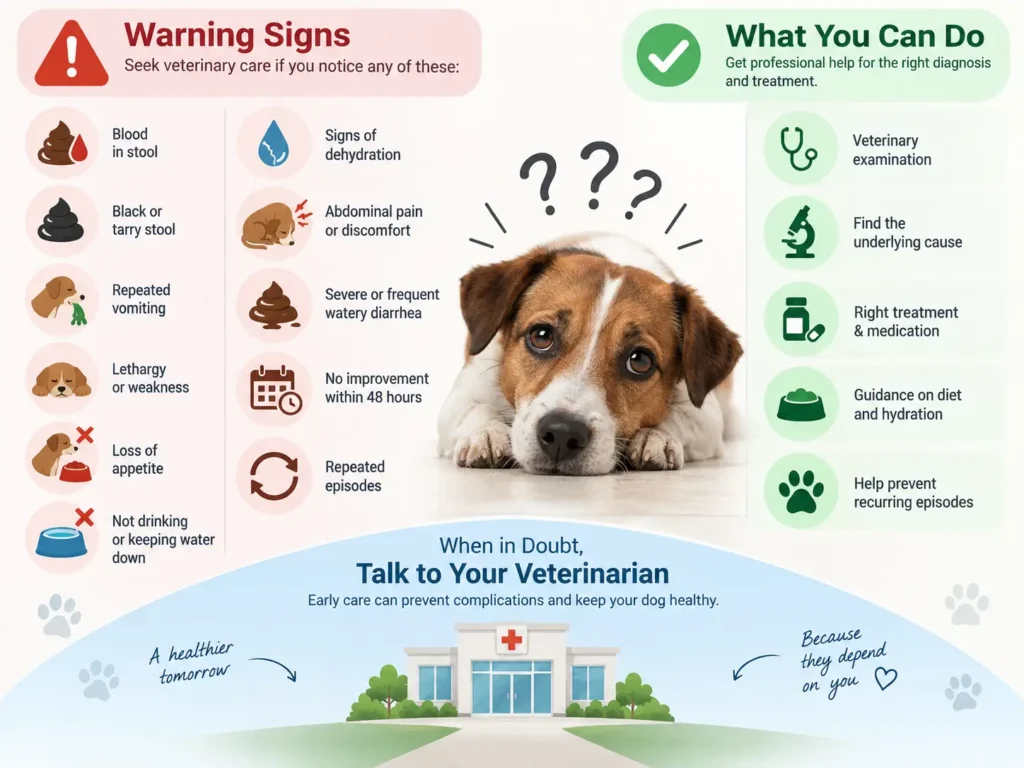
Some cases can be monitored briefly at home, but you should contact your veterinarian if the diarrhea is persistent, worsening, or accompanied by other signs of illness.
Veterinary attention is particularly important when your dog has:
- Blood in the stool
- Black or tarry stool
- Repeated vomiting
- Significant lethargy or weakness
- Loss of appetite
- Difficulty drinking or keeping water down
- Signs of dehydration
- Abdominal pain or significant discomfort
- Severe or very frequent watery diarrhea
- Diarrhea that does not improve within about 48 hours
- Repeated episodes that keep returning
Veterinary attention may be especially important when diarrhea occurs alongside appetite changes. If your dog develops dog appetite loss with digestive symptoms, the combination can provide an important clue about the severity or underlying cause of the problem.
If you suspect your dog swallowed a foreign object or consumed something potentially toxic, do not wait to see whether diarrhea develops or resolves. Contact a veterinarian or emergency veterinary care promptly.
Why puppies and vulnerable dogs need extra attention
A puppy with diarrhea deserves a different level of caution from a healthy adult dog with a single loose stool. Young dogs can become dehydrated more quickly, and infectious diseases can cause severe gastrointestinal illness.
The same applies to senior dogs and dogs with conditions that affect their ability to tolerate fluid loss or digestive stress. If a dog in one of these groups develops repeated diarrhea, vomiting, poor appetite, or unusual behavior, contacting a veterinarian early is appropriate.
Some infections can affect multiple body systems and may initially appear as digestive illness. For example, Leptospirosis symptoms and digestive illness in dogs can include gastrointestinal signs, which is another reason persistent or unusual symptoms should not automatically be assumed to be a simple stomach upset.
What happens when a veterinarian examines a dog with diarrhea?
Your veterinarian will usually start by looking for clues about what may have triggered the problem. You may be asked about your dog’s normal diet, recent food changes, treats, access to garbage or unusual substances, medications, travel, boarding, other animals, vaccination history, and previous episodes of diarrhea.
The examination can help assess hydration, abdominal discomfort, temperature, and your dog’s general condition. Depending on what the veterinarian finds, testing may include a fecal examination for parasites, bloodwork, X-rays, ultrasound, or other diagnostic tests. A fresh stool sample can be useful, so bring one to the appointment if you can collect it safely. A Veterinary Pet Consultation examination can help determine what further evaluation may be appropriate.
When testing is needed, in-house diagnostic testing for gastrointestinal problems can help the veterinary team investigate potential causes based on your dog’s symptoms and examination findings.
Treatment then depends on the cause. A dog with uncomplicated acute diarrhea may need dietary support and monitoring, while another may need fluids, parasite treatment, prescription medication, hospitalization, or treatment for an underlying gastrointestinal or systemic disease.
How to prevent recurring diarrhea
You cannot prevent every cause of diarrhea, but you can reduce some common triggers.
Introduce new foods gradually rather than changing your dog’s diet overnight. Keep garbage, spoiled food, dangerous household substances, and objects that your dog might swallow out of reach. Avoid giving large amounts of rich or fatty food, particularly if your dog has a history of digestive sensitivity.
If your dog develops diarrhea repeatedly, keep track of what they ate, when the symptoms started, how often they passed stool, and whether vomiting or appetite changes occurred. A recurring pattern can provide your veterinarian with useful information and may help identify food-related problems, parasites, chronic gastrointestinal disease, or another underlying cause.
Frequently Asked Questions
What should I do if my dog has diarrhea but seems completely normal?
If your dog is an otherwise healthy adult, remains alert, is drinking normally, and has no vomiting, blood in the stool, significant pain, or other concerning symptoms, you can generally monitor a mild episode closely. Make fresh water available and follow your veterinarian’s advice about an easily digestible diet. If the diarrhea persists, becomes more frequent, or your dog’s behavior changes, contact your veterinarian.
What is the best dog food for dogs with diarrhea?
There is no single food that is best for every dog with diarrhea. A veterinarian may recommend a highly digestible therapeutic gastrointestinal diet because these foods are formulated for dogs with digestive problems. A short-term bland diet may also be recommended in some uncomplicated cases, but homemade chicken and rice is not nutritionally complete and should not become a long-term diet.
How long does dog diarrhea usually last?
Mild acute diarrhea can resolve within a few days, particularly when it is caused by a temporary dietary or digestive upset. However, diarrhea that continues for about 48 hours or more, or diarrhea accompanied by vomiting, lethargy, poor appetite, blood, or black stool, warrants veterinary attention.
Can I give my dog Imodium for diarrhea?
Do not give Imodium or other human anti-diarrheal medication unless your veterinarian specifically tells you to. Loperamide is sometimes used in veterinary medicine, but it is an off-label medication for dogs and is not appropriate for every cause or every dog.
Should I stop feeding my dog when they have diarrhea?
Do not assume that fasting is necessary for every dog with diarrhea. Current veterinary nutrition guidance recognizes that appropriate nutrition can support recovery, while a veterinarian may recommend temporarily withholding food in particular circumstances. Puppies and dogs with other health problems should not be fasted without veterinary guidance.
Why does my dog keep getting diarrhea even after it gets better?
Recurring diarrhea can have many causes, including parasites, food intolerance, dietary problems, inflammatory gastrointestinal disease, pancreatic disorders, and other medical conditions. If your dog repeatedly develops diarrhea, the goal should be to identify the underlying cause rather than repeatedly treating individual episodes at home. Your veterinarian may recommend fecal testing, bloodwork, imaging, or dietary evaluation depending on the pattern.
When is diarrhea an emergency for a dog?
Diarrhea should be treated as more urgent when it is accompanied by repeated vomiting, significant weakness or lethargy, inability to keep water down, severe pain, black or tarry stool, or substantial blood. Suspected poisoning or swallowing a foreign object also requires prompt veterinary attention rather than home treatment.
Can an upset stomach cause diarrhea in dogs?
Yes. Diarrhea is a common sign of gastrointestinal upset, and a dog with an upset stomach may also have vomiting, reduced appetite, abdominal discomfort, or other digestive changes. However, the same symptoms can occur with more serious conditions, so persistent or severe digestive problems should be evaluated rather than repeatedly assumed to be a simple upset stomach.
Final thoughts
A dog having diarrhea does not necessarily mean something serious is wrong, but the symptoms should be assessed in context. A healthy adult dog with a brief, mild episode may recover with hydration, appropriate food, and careful monitoring. Persistent diarrhea or diarrhea accompanied by vomiting, blood, weakness, dehydration, pain, or appetite changes needs veterinary attention.
The most useful approach is to focus on your dog’s overall condition rather than trying to find a single food or medication that will stop the diarrhea. If the problem keeps returning or does not improve, finding and treating the underlying cause is far more important than repeatedly suppressing the symptom.
Medically reviewed by Dr. Harinder Babbar, DVM
Veterinarian & Medical Director, McQueen Animal Hospital, Brampton, OntarioThis article has been medically reviewed and is based on current evidence-based veterinary literature and clinical guidance.