
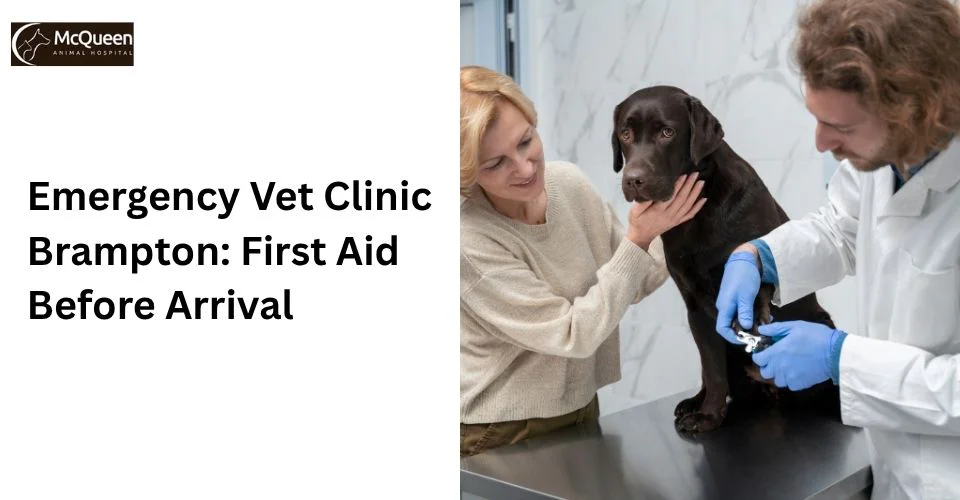
Pet emergencies can happen without warning. A dog may suddenly collapse, a cat might struggle to breathe, or an injury could occur late at night when regular clinics are closed. In stressful situations, knowing basic first aid before reaching an emergency vet clinic in Brampton can help stabilize your pet and potentially prevent the condition from worsening.
While first aid is never a replacement for professional veterinary treatment, quick action during the first few minutes of an emergency can make a major difference. Clinics like McQueen Animal Hospital continue helping pet owners in Brampton with urgent veterinary care, emergency assessments, and immediate treatment support when pets need fast medical attention.
When a Pet Emergency Requires Immediate Care
Some situations should never wait for a regular appointment. Pets often hide pain and illness, which means symptoms can quickly become serious.
Seek emergency veterinary care immediately if your pet has:
- Difficulty breathing
- Severe bleeding
- Collapse or unconsciousness
- Seizures
- Hit-by-car injuries
- Poison ingestion
- Swollen abdomen
- Heatstroke symptoms
- Choking
- Persistent vomiting
- Trouble standing
- Sudden paralysis
Many emergency cases become more manageable when owners stay calm and transport pets safely to the clinic as quickly as possible.
Stay Calm and Assess the Situation
During emergencies, pets may panic or react aggressively because of fear and pain. Before attempting first aid, carefully assess the environment and avoid sudden movements.
Start by checking:
- Breathing
- Responsiveness
- Visible bleeding
- Body temperature
- Mobility
- Gum color
If possible, call the emergency vet clinic while preparing to travel. Veterinary teams can often provide guidance before arrival.
First Aid for Bleeding
Bleeding is one of the most common pet emergencies. Quick pressure control can reduce blood loss before reaching the veterinarian.
What To Do
- Use a clean towel or gauze
- Apply steady pressure directly on the wound
- Keep pressure for several minutes
- Avoid repeatedly checking the wound
- Elevate the injured area if possible
What To Avoid
- Do not use tight tourniquets unless instructed
- Do not apply human medications
- Avoid cleaning deep wounds aggressively
Severe bleeding always requires immediate veterinary treatment even if it appears controlled.
What To Do if Your Pet Stops Breathing
Breathing emergencies are extremely serious. Pets struggling to breathe should be transported immediately.
Warning signs include:
- Open-mouth breathing in cats
- Blue or pale gums
- Loud breathing sounds
- Choking motions
- Extreme weakness
Basic Emergency Steps
- Keep the airway clear
- Remove visible obstructions only if easily accessible
- Avoid forcing objects into the mouth
- Keep the neck straight during transport
- Minimize stress and movement
If trained, pet CPR may help in some situations until veterinary care becomes available.
Handling Suspected Poisoning
Many household items are toxic to pets, including:
- Chocolate
- Xylitol gum
- Human medications
- Cleaning chemicals
- Certain plants
- Rodenticides
If poisoning is suspected:
- Remove access to the toxin
- Save the product packaging
- Do not force vomiting unless instructed
- Contact the emergency clinic immediately
Quick identification of the toxin helps veterinarians begin faster treatment.
Managing Seizures Safely
Watching a pet have a seizure can be frightening, but staying calm is important.
During a Seizure
- Keep the area clear
- Move furniture away if possible
- Dim bright lights
- Reduce noise
- Do not place hands near the mouth
After the Seizure
- Keep your pet warm and calm
- Monitor breathing
- Time the seizure duration
- Seek emergency veterinary care
Multiple seizures or seizures lasting several minutes are considered medical emergencies.
Heatstroke First Aid for Pets
Heatstroke can become fatal very quickly, especially during warm Ontario summers or inside parked vehicles.
Symptoms may include:
- Excessive panting
- Drooling
- Vomiting
- Weakness
- Collapse
- Bright red gums
Immediate First Aid
- Move the pet to a cool area
- Offer small amounts of water
- Use cool wet towels on paws and body
- Turn on fans or air conditioning
- Travel to the emergency clinic immediately
Avoid ice-cold water because sudden temperature changes may worsen shock.
What To Do for Broken Bones or Injuries
Pets with fractures or trauma may react unpredictably because of pain.
Safety Tips
- Avoid excessive movement
- Use a towel or blanket as support
- Carry smaller pets carefully
- Keep injured limbs stable
- Transport larger dogs using a flat surface if possible
Never attempt to reset bones yourself.
Safe Transportation During Emergencies
Transporting pets safely can prevent additional injury.
For Small Pets
- Use a secure carrier
- Add blankets for comfort
- Keep movement minimal
For Larger Dogs
- Use towels or blankets as stretchers
- Keep the spine aligned
- Avoid sudden lifting motions
Having another person assist during transport is often helpful.
Important Pet First Aid Supplies To Keep at Home
A basic pet first aid kit can help during emergencies before reaching the vet clinic.
Recommended supplies include:
- Gauze pads
- Non-stick bandages
- Clean towels
- Disposable gloves
- Digital thermometer
- Saline solution
- Pet-safe antiseptic
- Emergency contact numbers
- Muzzle for injured dogs
- Flashlight
Keeping a travel-sized emergency kit in the car can also be useful.
Why Emergency Veterinary Care Matters
Even when pets appear stable after first aid, hidden internal injuries or complications may still exist. Emergency veterinarians have access to:
- Oxygen therapy
- Diagnostic imaging
- Surgical treatment
- Pain management
- IV fluids
- Toxicity treatment
- Critical monitoring equipment
Prompt professional care greatly improves outcomes in serious emergencies.
Choosing the Best Vets in Brampton for Emergencies
Pet owners should identify a trusted emergency clinic before a crisis happens. During emergencies, searching for help at the last minute can waste valuable time.
Look for clinics that offer:
- Emergency care availability
- Experienced veterinary teams
- Diagnostic equipment
- Surgical services
- Critical care monitoring
- Clear communication
- Fast intake support
Many pet owners in Brampton rely on clinics like McQueen Animal Hospital for urgent veterinary situations, preventive care, and ongoing pet health support.
Final Thoughts
Pet emergencies are stressful, but basic first aid knowledge can help stabilize your pet before professional treatment begins. Staying calm, acting quickly, and transporting your pet safely are the most important steps during critical situations.
Whether dealing with injuries, breathing problems, poisoning, or heatstroke, immediate veterinary attention remains essential. Emergency vet clinics in Brampton continue playing a vital role in protecting pets during life-threatening situations, giving owners access to urgent care when every minute matters.