
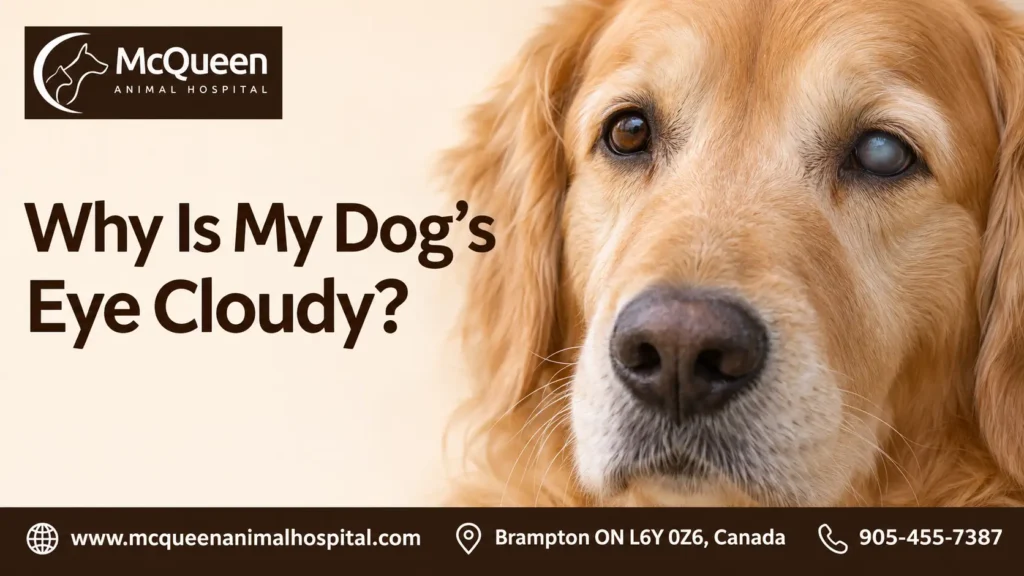
If your dog’s eye suddenly looks white, blue or grey, call your veterinarian today, even if your dog seems comfortable. Seek urgent veterinary care if the eye is red, your dog is squinting or holding it shut, or they suddenly start bumping into familiar objects. If those signs appear after hours, contact an emergency veterinary hospital. A corneal injury, inflammation inside the eye or a sudden rise in eye pressure can all cause cloudiness, and some of these problems can threaten vision quickly.
What the cloudiness might mean
A cloudy patch or haze across the front of the eye
The cornea is the clear front surface of the eye. A scratch or ulcer can cause a cloudy patch, often with tearing or squinting. Swelling in the cornea can create a more diffuse blue-grey haze that seems to cover both the coloured iris and the pupil. Uveitis, or inflammation inside the eye, can also cause a hazy appearance, redness and discomfort.
Glaucoma is another possible cause of corneal haze. Pressure inside the eye can rise suddenly, causing pain and damaging vision. The eye may look red and cloudy at the same time. An eye pressure measurement helps the veterinarian distinguish glaucoma from other conditions with a similar appearance. McQueen’s guide to glaucoma in dogs and cats explains how the condition develops and why it can affect one eye before the other.
A white or grey change within the pupil
The lens sits behind the iris, so cloudiness in the lens may look like a pale spot or haze within the pupil. A cataract is an opacity in the lens. Its effect on vision depends partly on how much of the lens is affected. Nuclear sclerosis is a gradual age-related change that can give both eyes a bluish-grey cast and usually has little effect on vision.
If your older dog’s eye seemed to turn white overnight, you may have caught a gradual change in different lighting, or the cloudiness may genuinely be new. Age and colour alone can’t settle that question. A slow, similar change in both eyes without discomfort can be discussed with your vet at a regular appointment. If you can’t tell how long the cloudiness has been there, call the clinic for advice on timing.
What to do before your dog is seen
When you call, say when you first saw the haze, whether it affects one or both eyes, and whether there was a recent injury. Describe what your dog is doing as well as what the eye looks like. Tearing, rubbing the eye, holding it partly shut or suddenly hesitating at familiar steps can help the clinic assess discomfort or possible changes in vision. If you’re in Brampton, call McQueen Animal Hospital about an eye examination and describe those signs so the team can advise you on how soon your dog should be seen.
Avoid human eye drops and medication left over from a previous eye problem unless a veterinarian directs you to use them for this episode. Steroid eye drops, for example, can worsen a corneal ulcer. Waiting to see whether the haze clears can also give an ulcer time to deepen or elevated pressure time to damage the eye.
What the veterinarian may check
The veterinarian may start with light and magnification to find where the haze is coming from. Fluorescein dye helps reveal a scratch or ulcer on the corneal surface, and tonometry measures pressure inside the eye. Depending on what the veterinarian finds, they may check how the pupils respond to light and examine the lens and retina. If the eye findings or your dog’s history point to a wider health concern, the veterinarian may also recommend a general physical examination to guide further investigation.
Frequently asked questions
Can diabetes make my dog’s eyes turn cloudy quickly?
Yes. Diabetes-related cataracts can develop quickly and affect both eyes. They can also trigger inflammation inside the eye. If your dog has diabetes, mention it when you call about new cloudiness so the clinic has that information when assessing the change.
My dog already has a cataract. Why has the eye become red and sore?
A cataract can trigger inflammation inside the eye, and glaucoma can develop as a complication. If an eye with a known cataract becomes red or painful, seek urgent care. The veterinarian may check for inflammation and measure the pressure inside the eye.
If glaucoma is found in one eye, does the clear eye need to be checked?
Yes. Primary glaucoma can affect both eyes at different times. If that’s the diagnosis, your veterinarian may recommend monitoring pressure in the eye that still looks clear. What the other eye needs depends on the cause of the glaucoma.
Could my dog have a corneal ulcer even if I didn’t see an injury?
Yes. A corneal ulcer can develop after an unnoticed injury or because the surface of the eye is poorly protected, as can happen with inadequate tear production. An eye exam can include both fluorescein staining to check the cornea and a tear test if the veterinarian suspects dryness.
How can the vet check the retina if the eye is too cloudy to see through?
If the haze blocks the view and the veterinarian needs to assess the structures behind it, they may recommend an ocular ultrasound. For example, ultrasound can help assess the retina when a dense cataract prevents the veterinarian from seeing it directly.
Medically reviewed by Dr. Harinder Babbar, DVM
Veterinarian & Medical Director, McQueen Animal Hospital, Brampton, OntarioThis article has been medically reviewed and is based on current evidence-based veterinary literature and clinical guidance.